
Blessed
Blessed Afonso Pacheco |
||
|---|---|---|
| Place of Birth: | Spain | |
| State: | Castile la Nueva | |
| Date of Birth | 1551 | |
| Died On: | 15 July 1583 | |
| Blessed: | 30 April 1893 | |
| Canonized: | ||
| Buried at: | ||
| Feast Day: | 25 July | |
Blessed Afonso Pacheco was one of the early Jesuit missionaries whose life and death became part of the foundational Catholic memory of Goa. Born in 1551 in Castile la Nueva, Spain, he came from a noble family at a time when Catholic reform, missionary zeal, and the global expansion of the Church were reshaping religious life across Europe and beyond. Though the exact town of his birth is not clearly specified, his Spanish origin formed an important part of his identity as he later entered the service of the Church in India.
He entered the Society of Jesus on 8 September 1567. His formation took place during the energetic missionary age of the Jesuits, when the order was sending learned and disciplined men to new territories across Asia, Africa, and the Americas. Pacheco seems to have been remembered not only for piety, but also for prudence, intelligence, and practical judgment. These qualities later helped him earn positions of trust within the mission.
In September 1574, he arrived in Goa. At that time, Goa was the principal Catholic center of Portuguese India and one of the most important missionary bases in Asia. The local Church was expanding, but it was also operating within a complex and often difficult political and social environment. Pacheco quickly distinguished himself by his virtue and careful leadership. In 1578, he was sent to Europe on important business, which indicates that his superiors held him in high regard and trusted him with serious responsibilities.
He returned to India in 1581 and was appointed rector of Rachol. This was a major responsibility. As rector, he was not simply engaged in parish work; he held a role of leadership in one of the key institutions connected with the Church’s mission in Goa. His life at this stage would have included governance, priestly ministry, discipline, and oversight of missionary activity. He was therefore both a pastor and an administrator, serving the Church in a period of rapid growth and strong tension.
His name is especially linked with the Salcete mission and the troubled relationship between missionary expansion and local resistance in that part of Goa. Historical accounts note that he accompanied earlier Portuguese punitive expeditions to Cuncolim and was involved in the destruction of temples there. This part of the history is difficult and should not be softened. It belongs to the larger and often painful story of sixteenth-century colonial and missionary encounter in Goa. Yet within Catholic hagiographical memory, Afonso Pacheco is remembered above all for the manner in which he faced death for the faith.
On 15 July 1583, he joined the Jesuit party that went to Cuncolim. Violence erupted, and the missionaries and their companions were attacked. During the assault, he is remembered for stopping armed resistance from his own side, insisting that they had not come to fight. He is also traditionally remembered as addressing the crowd in Konkani with words intended to calm fear. He was then wounded with a spear and killed. In devotional memory, he died in a posture of surrender, with his arms extended like a cross.
His witness became part of the collective memory of the Martyrs of Cuncolim, among whom he is remembered with Blessed Rodolfo Acquaviva, Blessed Pietro Berno, Blessed António Francisco, and Blessed Francisco Aranha. He was beatified on 30 April 1893 by Pope Leo XIII. He has not been canonized.
For the Church, Blessed Afonso Pacheco is significant as a priest who united leadership, missionary labor, and steadfastness in death. For India, especially Goa, he remains part of the early Catholic story of sacrifice, conflict, and faith on Indian soil. Pilgrims remember him not because his life was simple, but because it stands at the intersection of courage, mission, and the complicated human history of evangelization in Goa.
Other Interesting Facts
- He was a Jesuit priest, not a lay brother.
- He entered the Society of Jesus on 8 September 1567.
- He arrived in Goa in September 1574.
- He was sent back to Europe in 1578 on important business, showing the trust placed in him.
- He returned to India in 1581 and became rector of Rachol.
- He is one of the principal Martyrs of Cuncolim.
- He is traditionally remembered as having spoken to the crowd in Konkani before the attack.
- His feast is observed on 25 July, although the commonly accepted date of death is 15 July 1583.
- He has been beatified, but he has not been canonized.
Key Locations for Pilgrims Castile la Nueva, Spain – Blessed Afonso Pacheco was born in 1551 in the region historically identified as Castile la Nueva. His precise town of birth is not securely specified in standard records, but this region remains the principal geographical setting linked to his origins and family background. Goa – Afonso Pacheco arrived in Goa in September 1574 and entered fully into the life of the Jesuit mission in Portuguese India. Goa was the center of Church administration, missionary work, and religious formation in the region. Rachol – After returning to India from Europe in 1581, he was made rector of Rachol. This makes Rachol one of the most important places associated with his pastoral leadership and missionary administration. Present-day pilgrims can visit Rachol, which remains deeply connected with Goa’s Catholic history. Orlim, Goa – Before the final journey to Cuncolim, the Jesuit party is traditionally connected with the church at Orlim, from where they set out for the mission visit that ended in martyrdom. Present-day pilgrims can visit Orlim as part of a wider Cuncolim martyrs route. Cuncolim, Goa – This is the central place of his martyrdom and the most important site of his memory in India. He was killed here on 15 July 1583 while accompanying the Jesuit mission party. Martyrs’ Well, Cuncolim – Tradition holds that the bodies of the martyrs were thrown into a well after the attack. Over time, this place became linked with local devotion and remembrance. Present-day pilgrims can visit the site associated with the well. Se Cathedral, Old Goa – Relics associated with the Cuncolim martyrs were later connected with Old Goa, and the wider cathedral complex remains a major place of remembrance for the early martyrs of Goa. Present-day pilgrims can visit Se Cathedral.
Blessed Anthony Francis |
||
|---|---|---|
| Place of Birth: | Coimbra, Portugal | |
| State: | Nantes | |
| Date of Birth | 1553 | |
| Died On: | 15 July 1583 | |
| Blessed: | 16 April 1893 | |
| Canonized: | ||
| Buried at: | Cuncolim, Salcete, Goa | |
| Feast Day: | 27 July | |
Blessed Anthony Francis, also known in Portuguese as António Francisco, was a sixteenth-century Jesuit priest from Portugal who gave his life for the faith in Goa. He was born in Coimbra in 1553 and is described in the historical tradition as a poor student. That detail, though brief, gives a glimpse of a man whose path to holiness did not begin in privilege or public prominence, but in simplicity, discipline, and fidelity. He entered the Society of Jesus in 1571, joining a missionary order that was then deeply engaged in education, evangelization, and sacramental work across many parts of the world.
In 1581, he traveled to India in the company of Father Alphonsus Pacheco. Soon after arriving in Goa, he was ordained a priest. This placed him within the energetic and demanding missionary life of the Church in Portuguese India, where priests often served amid cultural change, religious tension, and real personal danger. Anthony Francis is remembered especially for his spiritual seriousness. A long-standing account says that when he celebrated Mass, he prayed at the Elevation for the grace of martyrdom. Whether read devotionally or historically, this tradition shows how consciously he understood priesthood as a total offering to God.
His name is inseparably linked with the Martyrs of Cuncolim. On 15 July 1583, he was among the Jesuits who went to Cuncolim in Salcete, Goa, during a mission effort that ended in violent attack. Historical accounts record that he was struck with arrows and then killed with a sword blow to the head. He died alongside fellow Jesuits and companions, becoming one of the most remembered missionary martyrs in the history of the Church in Goa.
After the massacre, the bodies of the martyrs were recovered and first buried at Rachol. Their memory endured strongly in the Church of Goa, and Anthony Francis came to be honored not simply as a missionary who died abroad, but as a witness whose blood became part of the Christian history of India. This is why he remains important in Indian Catholic memory, especially in Goa: his life belongs to the early story of the Church’s sacrifices, tensions, and growth on Indian soil.
He was beatified on 16 April 1893 with the other Cuncolim martyrs. He has not been canonized. In the Archdiocese of Goa and Daman, their feast is kept on 27 July. Blessed Anthony Francis is remembered for courage, Eucharistic devotion, missionary obedience, and steadfastness unto death. His legacy continues in the churches and memorial places of Goa, where pilgrims still recall the cost of faith and the witness of those who gave everything for Christ.
Other Interesting Facts
- He is usually remembered not as an isolated figure, but as one of the five Jesuit Martyrs of Cuncolim.
- The formal recognition that their deaths were true martyrdom was associated with a much earlier cause, but his beatification took place only in 1893.
His story is especially significant in Goan Catholic devotional history, where the martyrs remain part of the local liturgical and historical memory.
Key Locations for Pilgrims
Coimbra, Portugal – This is associated with Anthony Francis as the city where he was known as a poor student before entering the Society of Jesus. It is historically linked to his early formation. Present-day pilgrims can visit Coimbra, though no specific shrine tied exclusively to him is identified in the available sources.
Orlim, Goa – The church at Orlim is connected with his final days. He is remembered as having celebrated Mass there shortly before his martyrdom. Present-day pilgrims can visit Orlim as part of a devotional route connected with the Cuncolim martyrs.
Cuncolim, Goa – This is the place of his martyrdom. It is the central pilgrimage location for devotion to the Martyrs of Cuncolim. Pilgrims can visit Cuncolim today.
St. Francis Xavier Chapel, Maddicotto, Cuncolim – The well into which the bodies of the martyrs were thrown is traditionally associated with this chapel. The well is still remembered locally and is reportedly opened for viewing on specific occasions. Pilgrims can visit the chapel area today.
Church of Our Lady of the Snows, Rachol – After the martyrdom, the bodies of the five Jesuits were first buried here. This makes Rachol an important historical and devotional stop for pilgrims. The church can still be visited.
Old Goa Cathedral – The martyrs’ remains were later transferred here in 1862. For pilgrims tracing the memory of the Cuncolim martyrs, Old Goa remains a major place of remembrance and prayer. Present-day pilgrims can visit Old Goa.
| Blessed Dionysius of the Nativity | ||
|---|---|---|
 |
||
| Place of Birth: | Normandy | |
| State: | ||
| Date of Birth | 12 December 1600 | |
| Died On: | 27 November 1638 | |
| Blessed: | 1900 | |
| Canonized: | ||
| Buried at: | ||
| Feast Day: | November 29 | |
Blessed Denis of the Nativity lived between 1600 till 1638 and was born in France. He became a sailor when he was 12 years old and was successful as a pilot-in-chief and cartographer in service to the Kings of France and Portugal. He was also knighted due to his bravery. He became a Carmelite friar taking the name of Dionysius or Denis of the Nativity. He was then sent on a mission to the Sultan of Aceh (Sumatra) by his superiors. However, once he reached there all the members of his party were seized at the instigation of the Dutch authorities. They were tortured and told to renounce their faith, forcing them to become Muslims. All refused and were martyred. Blessed Denis was the last person to be martyred of the group as he desired to strengthen the others. He was killed by a blow to his head by a scimitar. “Jesus, Mary,” were his last words.
Blessed Eliswa Vakayil |
||
|---|---|---|
 |
||
| Place of Birth: | Ochanthuruth, India | |
| State: | Kerala | |
| Date of Birth | 15 October 1831 | |
| Died On: | 18 July 1913 | |
| Blessed: | 8 November 2025 | |
| Canonized: | ||
| Buried at: | St. Joseph’s Convent, Varapuzha | |
| Feast Day: | 18 July | |
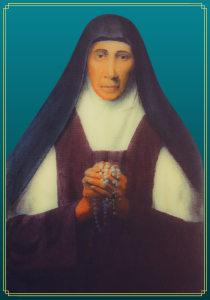
Blessed Eliswa Vakayil, known in religion as Eliswa of the Blessed Virgin Mary, stands among the most important women in the history of the Catholic Church in India. Born on 15 October 1831 at Ochanthuruth in Kerala, she came from the respected Vyppissery family and was the eldest of eight children of Thomman and Thanda. At a time when formal education for Catholic girls was uncommon, she received instruction that helped prepare her for a life of unusual spiritual and practical leadership.
Her early life unfolded within the Catholic world of nineteenth-century Kerala, where family duty, parish life, and strong devotional practice shaped everyday society. In keeping with the customs of the time, she entered marriage in 1847. She and her husband, Vareethu Vakayil, had one daughter, Anna, born on 21 April 1850. Her husband died not long afterward, leaving her a widow while still very young. This painful turning point became decisive in her spiritual journey. Rather than remarry, she gradually embraced a life marked by prayer, simplicity, and service to the poor.
For years she lived with deep interior discipline, and her desire to belong wholly to God matured through suffering. In 1862, she shared her longing for consecrated life with the Discalced Carmelite missionary Leopold Beccaro, who became an important guide. With his help, and with the support of her daughter Anna and her sister Thresia, she began the work that would change the course of women’s religious life in Kerala.
At Koonammavu, the first community took shape in poverty and faith. What began in a simple hut developed into the first indigenous Carmelite congregation for women in India. On 12 February 1866, the community received ecclesiastical recognition from Archbishop Bernardine Baccinelli of Verapoly. A more permanent convent followed, and the first sisters made their vows in July 1868. Her work was not only spiritual; it also helped open new paths for women through convent life, formation, education, and charitable care. She is remembered as a pioneer in founding the first convent school, boarding house, and orphanage for girls in her context.
One of the striking features of her life was her breadth of vision. Her community eventually included sisters of the Syro-Malabar tradition as well. After the reorganization of rites in Malabar, an order of 17 September 1890 required the Latin sisters to leave the original convent property to the Syrian sisters. This painful separation led to the emergence of two congregations: the Congregation of Teresian Carmelites (CTC) of the Latin Rite and the Congregation of the Mother of Carmel (CMC) of the Syro-Malabar Rite. Mother Eliswa then continued her mission at St. Joseph’s Convent in Varapuzha, where she served in the formation of younger sisters.
She died at Varapuzha on 18 July 1913. Her life had carried the experiences of daughter, wife, mother, widow, foundress, and spiritual mother. That unusual path gives her a special place in Catholic memory: she is not only a foundress, but also a witness to how grace can shape a life through sorrow, perseverance, and fidelity. Her tomb at Varapuzha became a place of prayer and pilgrimage long before the Church formally advanced her cause.
Her cause for sainthood advanced steadily in modern times. She was declared Venerable on 8 November 2023. On 14 April 2025, the Holy See recognized a miracle attributed to her intercession, and she was beatified at Vallarpadam on 8 November 2025. For the Church in India, especially in Kerala, Blessed Eliswa is significant as a foundational figure in indigenous women’s consecrated life, a champion of women’s dignity, and a lasting sign that holiness can grow in hidden sacrifice as much as in public works.
Other Interesting Facts
- Her religious name was Eliswa of the Blessed Virgin Mary.
- She founded the community first known as the Third Order of the Discalced Carmelites (TOCD) for women in India.
- Her founding work later gave rise to both the CTC and the CMC.
- She is widely remembered as the first religious sister in the history of the Kerala Church.
- Her life uniquely joined the experiences of wife, mother, widow, and religious foundress.
- Her tomb at Varapuzha remains an active place of pilgrim devotion and prayer for favors.
- Her beatification took place at Vallarpadam on 8 November 2025.
- She is especially important in India for advancing the religious, educational, and social uplift of women in nineteenth-century Kerala.
Key Locations for Pilgrims
Ochanthuruth (Cruz Milagres Parish area) – This is the place of her birth and early upbringing. It is important for understanding her family background, childhood faith, and the social world from which her vocation emerged. Present-day pilgrims can visit Ochanthuruth and the wider parish area associated with her origins.
Koonammavu – After marriage, widowhood, and her growing life of prayer, this became the place where her religious vision took concrete shape. Her first community began here in a simple hut, and the earliest convent life of the congregation was established here. Present-day pilgrims can visit Koonammavu as a foundational location in her mission.
St. Joseph’s Convent, Varapuzha – This became the principal place of her later years after the separation of rites in 1890. She lived, formed sisters, and continued her work here. Today it remains one of the most important places linked to her memory and can be visited by pilgrims.
Smruthi Mandhiram, Varapuzha – Her mortal remains were later transferred here from the original burial place. It is now the chief pilgrimage site associated with her intercession, where many of the faithful come to pray. Present-day pilgrims can visit this tomb chapel.
Basilica of Our Lady of Mount Carmel and Saint Joseph, Varapuzha – She was first buried in front of this basilica after her death in 1913. Even apart from the later transfer of her remains, this church remains historically connected to her death and burial. It is visitable today.
National Shrine Basilica of Our Lady of Ransom, Vallarpadam – This is the place where she was solemnly beatified on 8 November 2025. For pilgrims, it is now permanently associated with the Church’s public recognition of her holiness. The shrine is open to pilgrims.
Blessed Francis Aranha |
||
|---|---|---|
| Place of Birth: | Portugal | |
| State: | Nantes | |
| Date of Birth | 1551 | |
| Died On: | 15 July 1583 | |
| Blessed: | 30 April 1893 | |
| Canonized: | ||
| Buried at: | ||
| Feast Day: | 25 July | |
Blessed Francis Aranha, also known by his Portuguese name Francisco Aranha, belongs to the early generation of Jesuit missionaries who gave their lives during the first great period of Catholic expansion in India. He was born in Portugal in 1551. Although later tradition commonly associates him with Braga, the precise details of his birth are not firmly specified. What is clear is that he came from a family of standing and eventually traveled to India, where his life became closely linked with the Church in Goa.
He arrived in an age when Portuguese India was both a center of trade and a major field of missionary effort. Goa had become one of the principal bases for the spread of the Catholic faith in Asia. In that setting, Francis Aranha entered the Society of Jesus on 1 November 1571, not as a priest, but as a Jesuit brother. This distinction is important. His vocation was not centered on preaching in the same way as ordained missionaries, but on the practical, disciplined, and deeply apostolic service that Jesuit brothers offered to the mission.
His early assignments took him to Jesuit institutions in Cochin and Goa. He was known as a skilled draughtsman and architect, and older accounts remember him for helping to build chapels and church structures in Goa. In missionary territories, such work was more than technical labor. It supported sacramental life, catechesis, and the visible establishment of Christian communities. His vocation therefore united practical skill with religious obedience, making him a quiet but important contributor to the Jesuit mission in India.
Around 1577, he was assigned to the Salsette mission in Goa. This was a difficult and often tense field of work, marked by cultural change, social strain, and local resistance to Portuguese religious and political expansion. Francis Aranha often accompanied Jesuit missionaries in their apostolic efforts. His final witness came in this setting, during the events now remembered as the martyrdom of the Cuncolim mission party.
On 15 July 1583, a group of Jesuits and their companions went to Cuncolim. Violence broke out, and the mission party was attacked. Francis Aranha was among those struck early in the assault. Traditional accounts state that after being wounded, he fell into a rice field, was later found, and was ordered to bow before a local idol. He refused. He was then tied to a tree and killed with arrows. In Catholic memory, this refusal to renounce the faith became the defining sign of his martyrdom. He died alongside the other Martyrs of Cuncolim, who are remembered together as witnesses of Christ in India.
His importance to the Church lies in that witness. He was not a famous theologian, founder, or bishop. He was a Jesuit brother whose fidelity in mission ended in death. That gives his life a distinct and enduring significance: holiness expressed through service, steadiness, and courage. For the Church in India, especially in Goa, he remains one of the early Catholic martyrs connected with the history of evangelization on Indian soil. His memory is inseparable from the complex and often painful history of sixteenth-century Goa, but within Catholic devotion he is honored for his perseverance unto death.
Pope Leo XIII beatified Francis Aranha with his fellow Martyrs of Cuncolim on 30 April 1893. His feast is kept on 25 July. He has not been canonized. Today, pilgrims remember him above all in Cuncolim and Old Goa, where the story of his sacrifice continues to form part of the Catholic memory of India. He is especially meaningful to those who value hidden service in the Church, because his life shows that practical work, done faithfully for Christ, can become a path to heroic sanctity.
Other Interesting Facts
- He was a Jesuit brother, not a priest.
- He entered the Society of Jesus on 1 November 1571.
- He is remembered as a religious and martyr in Catholic records.
- He is one of the five principal Martyrs of Cuncolim.
- Older accounts describe him as a skilled architect and builder of chapels in Goa.
- His beatification took place under Pope Leo XIII in 1893.
- His feast is observed on 25 July, even though the martyrdom itself is dated to 15 July 1583.
- He is especially remembered in India as part of the early Catholic witness of Goa’s missionary history.
- The monument at Cuncolim linked with his death remains one of the strongest local devotional associations with his memory.
Key Locations for Pilgrims
Braga, Portugal – Francis Aranha is traditionally associated with Braga, and older Catholic accounts connect his family background to that region. While his exact birthplace is not securely specified, Braga remains the principal place in Portugal linked to his origins.
Old Goa (Goa Velha) – After coming to India, Aranha entered the Society of Jesus in Goa and was formed within the mission world of Portuguese India. Old Goa, the center of the early Church in the region, is closely connected with his Jesuit life and missionary service. Present-day pilgrims can visit Old Goa, where many major churches and historic Catholic sites remain open.
Cochin (Kochi) – One of his early assignments as a Jesuit brother was connected with the Jesuit college in Cochin. This place is part of his formation and early service before his later work in Goa. Present-day pilgrims can visit Kochi, though the original sixteenth-century Jesuit context has changed over time.
Cuncolim, Goa – This is the place of his martyrdom and the central site of his memory in India. He was killed here during the violent attack on the Jesuit mission party in 1583. Present-day pilgrims can visit Cuncolim, which remains the primary place associated with his witness and sacrifice.
Martyrdom Site Monument, Cuncolim – Traditional accounts state that after being wounded, Francis Aranha was tied to a tree and killed with arrows; the place where that tree stood was later marked by a monument surmounted by a cross. This is one of the most direct physical memorials connected with his death. Present-day pilgrims can visit the memorial area in Cuncolim.
Se Cathedral, Old Goa – Historical references indicate that relics associated with the Cuncolim Martyrs were later preserved in Goa, with a relic box linked to the martyrs kept at Se Cathedral. For pilgrims devoted to the Martyrs of Cuncolim, this is an important place of remembrance. Present-day pilgrims can visit Se Cathedral.
Blessed Mary of the Passion |
||
|---|---|---|
 |
||
| Place of Birth: | Nantes, France | |
| State: | Nantes | |
| Date of Birth | 1860 | |
| Died On: | 1904 | |
| Blessed: | 10 October 2002 | |
| Canonized: | ||
| Buried at: | Motherhouse in Rome | |
| Feast Day: | ||
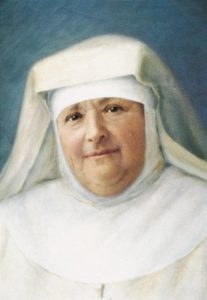
Mary of the Passion was born Helene de Chappotin de Neuville, she came from a distinguished French family in Nantes. In 1860, she entered the Poor Clares, but poor health forced her to leave the following year. In 1864, she joined the Sisters of Mary Reparatrix and took the name Mary of the Passion. From 1865 to 1876, she worked in the Madura missions in India. In 1877, she established the Institute of the Missionaries of Mary, which became the Franciscan Missionaries of Mary (F.M.M.) in 1882 when she adopted the Third Order Rule. Mary was still living when seven members of her community were martyred in the 1900 Boxer Uprising. In addition to caring for people afflicted with leprosy, her sisters have served in education, social service, nursing, and catechetics—frequently with Franciscan Missionaries of Mary of other nationalities. She was beatified in 2002.
Blessed Odoric of Pordenone |
||
|---|---|---|
 |
||
| Place of Birth: | Villanova, Italy | |
| State: | Friuli | |
| Date of Birth | ||
| Died On: | 14 January 1331 | |
| Blessed: | 2 July 1755 | |
| Canonized: | ||
| Buried at: | Church of Our Lady of Mount Carmel, Udine, Italy | |
| Feast Day: | 14 January | |
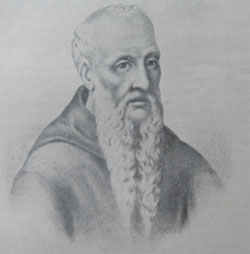
Blessed Odoric of Pordenone stands among the most remarkable Franciscan missionaries of the later Middle Ages. Born near Pordenone in Friuli, he belonged to that generation of friars who carried the Gospel far beyond the familiar frontiers of Europe. The exact date of his birth is not specified, but his life unfolded during a period when the Church’s missionary horizon was widening across Asia.
He entered the Order of Friars Minor and was formed in the Franciscan spirit of poverty, obedience, endurance, and zeal for souls. As a son of Saint Francis, Odoric was shaped by a readiness to go where Christ was little known, and to embrace hardship for the sake of the Gospel. His calling led him not into a settled convent life, but into long roads, sea passages, foreign courts, and distant Christian communities.
Odoric’s missionary travels took him through the Near East and into India. His journey is especially meaningful for Indian Catholic memory because he visited the western coast of India, came into contact with the relics of martyred Franciscans at Thana, traveled along the Malabar coast, and then made pilgrimage to the shrine of Saint Thomas the Apostle at Mylapore. In this way, his life touched both the Latin missionary tradition and the ancient Christian heritage of India.
From India he continued onward through parts of Southeast Asia and eventually reached China, where he spent substantial time. He is remembered not only as a missionary traveler but also as a witness. His account of the lands he visited preserved valuable observations about peoples, customs, and Christian missions in Asia. For many in Europe, his narrative opened a wider awareness of the East.
His return journey was difficult. After years of travel and strain, he came back toward Italy in frail health. He died at Udine on 14 January 1331. After his death, devotion to him rose quickly. He was honored by the faithful as a holy friar whose life had been spent in courage, sacrifice, and fidelity. Centuries later, the Church formally confirmed this veneration in his beatification.
Blessed Odoric remains important to the Church as a model of missionary perseverance, humble witness, and fearless endurance. He belongs to that company of servants of God who crossed cultures without losing their faith, and who showed that the Gospel can be carried with both conviction and reverence. His memory still speaks to pilgrims, missionaries, and all who seek Christ beyond comfort and familiarity.
Other Interesting Facts
- He was a Franciscan missionary of the fourteenth century, remembered for both holiness and extraordinary travel.
- His cult arose soon after his death, long before formal beatification.
- His beatification was confirmed by Pope Benedict XIV in 1755.
- He is closely linked to the Franciscan missionary presence in Asia.
- His travels included a documented connection to India, especially Thana, the Malabar coast, and Mylapore.
- His written travel account became one of the notable medieval Christian descriptions of Asia.
- His tomb in Udine remains the chief center of devotion associated with him.
Key Locations for Pilgrims
Church of Our Lady of Mount Carmel, Udine, Italy – This church holds the tomb and venerated remains of Blessed Odoric. His body was translated here after earlier burial elsewhere in Udine, and pilgrims can visit the church today as the principal shrine connected with his cult.
Church of San Francesco, Udine, Italy – This was the earlier place of his burial and public veneration after his death. It is closely linked with the first growth of devotion to him, and the site remains important for its historical connection to his tomb and memory.
Church of Blessed Odoric of Pordenone, Pordenone, Italy – This later church is dedicated in his honor in his native area, reflecting the enduring local devotion to him. Pilgrims may visit it today as a place associated with his remembered legacy.
San Thome Basilica, Chennai, India – Blessed Odoric is known to have visited the shrine of Saint Thomas the Apostle at Mylapore. The present basilica stands at that traditional apostolic site and is a meaningful place of pilgrimage for those tracing Odoric’s journey through India.
Blessed Pietro Berno |
||
|---|---|---|
 |
||
| Place of Birth: | Ascona, Switzerland | |
| State: | Ticino / Locarno region | |
| Date of Birth | 1550 | |
| Died On: | 15 July 1583 | |
| Blessed: | 16 April 1893 | |
| Canonized: | ||
| Buried at: | Old Goa | |
| Feast Day: | 27 July | |
Blessed Pietro Berno was a Jesuit priest from Switzerland who became one of the most remembered missionary martyrs of sixteenth-century Goa. He was born at Ascona, at the foot of the Alps, around 1550, though some later summaries give his birth as around 1552. Historical accounts describe him as coming from humble circumstances. His early life was not marked by worldly distinction, but by a path of education, priestly preparation, and generous availability to the Church. He studied in Rome, where he was ordained a priest before entering the Society of Jesus in 1577. This sequence is notable: he was already a priest when he embraced the Jesuit life, showing that his missionary vocation deepened within an already serious commitment to Christ and the Church.
Soon after joining the Jesuits, he was directed toward the missions of India. He reached Goa in 1579. The mission field he entered was spiritually fruitful but also deeply tense. Portuguese colonial expansion, missionary activity, local social systems, and religious conflict had created a difficult environment in which priests often served with real personal risk. Berno was assigned to Salcete, where he took part in active missionary work. Sources remember him as a man of energy and conviction, fully engaged in the religious and pastoral struggles of his time.
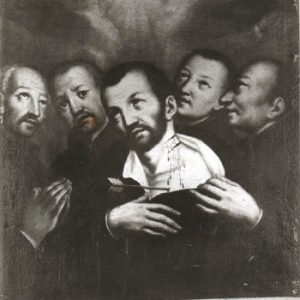
His life is inseparably linked with the Martyrs of Cuncolim. On 15 July 1583, he accompanied the mission party to Cuncolim in Goa. There, in the violence that erupted against the missionaries and their companions, Pietro Berno was killed with the others. His death was not an isolated tragedy but part of a larger and painful chapter in Goan church history, one that reflected not only missionary courage but also the complex tensions of the period. Even so, the Church came to honor him principally as a martyr: a priest who remained faithful in the face of danger and sealed his witness with his blood.
After the massacre, the bodies of the Jesuits were recovered and buried first at Rachol. Over time, their memory took deep root in Goa, especially in the Archdiocese of Goa and Daman. Pietro Berno became important not only in Jesuit memory but also in the local Catholic heritage of India. His witness belongs to the early history of the Church in Goa, where the memory of sacrifice, mission, and perseverance remains strong. He was beatified on 16 April 1893 along with his companions. He has not been canonized. Their feast is kept on 27 July. Blessed Pietro Berno is remembered for missionary zeal, priestly fidelity, courage, and the willingness to suffer for Christ.
Other Interesting Facts
- Historical sources do not agree perfectly on his birth year: some give 1550, while others give c. 1552.
- He is commonly listed among the five Jesuit Martyrs of Cuncolim, together with Rudolph Acquaviva, Alphonsus Pacheco, Anthony Francis, and the lay brother Francis Aranha.
His memory is especially strong in Goa, where the martyrs’ feast continues to be observed in the local Church on 27 July.
Key Locations for Pilgrims
Ascona, Switzerland – This is the town traditionally identified as Pietro Berno’s birthplace. It is the starting point of his earthly journey and remains important for those who wish to reflect on his early life and origins. Present-day pilgrims can visit Ascona, though no major shrine exclusively dedicated to him is specified in the sources.
Rome, Italy – Berno studied for the priesthood in Rome and later entered the Society of Jesus there in 1577. Rome is significant as the place of his higher formation and Jesuit commitment. Present-day pilgrims can certainly visit Rome, though a specific public devotional site tied only to him is not specified.
Lisbon, Portugal – He passed through Lisbon in connection with his departure for the Indian mission and completed part of his Jesuit formation in that wider missionary movement toward Asia. Pilgrims can visit Lisbon, though no dedicated shrine is specified.
Cuncolim, Goa – This is the place of his martyrdom and the most important pilgrimage location connected with him. It is where he and his companions were killed during the mission of 1583. Pilgrims can visit Cuncolim today.
Church of Our Lady of the Snows, Rachol, Goa – After the martyrdom, the bodies of the Jesuit martyrs were first buried here. This makes Rachol an important place of remembrance for pilgrims devoted to the Cuncolim martyrs. The church remains visitable.
Old Goa – The relics of the martyrs were later transferred and are associated with the continuing liturgical memory of the Church in Goa. Old Goa remains a major destination for pilgrims honoring the early martyrs of the region.
| Blessed Rani Maria Vattalil FCC | ||
|---|---|---|
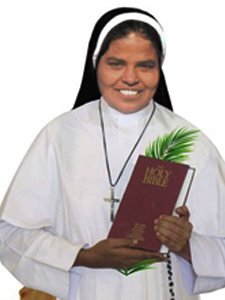 Bl.Rani Maria Vattalil FCC |
||
| Place of Birth: | Pulluvazhy | |
| State: | Kerala | |
| Date of Birth | 29 January 1954 | |
| Died On: | 25 February 1995 | |
| Blessed: | 04 November 2017 | |
| Canonized: | ||
| Buried at: | Udayanagar, Madhya Pradesh | |
| Feast Day: | ||
Sr.Rani Maria, a proud daughter of Pulluvazhy and a professed religious nun of the Franciscan Clarist Congregation (F.C.C.) will be beatified "Blessed Martyr" on 4th November 2017. Sr. Rani Maria was born on 29 January 1954 as the second child of Paily and Eliswa Vattalil, of St.Thomas Parish in the Arch-diocese of Ernakulam - Angamaly of the Syro-Malabar Church. After the initial stages of formation, she made her First Profession on 1 May 1974 and Final Profession on 22 May 1980. She obtained B.A and M.A in sociology in 1982 and 1989 respectively. The motto of her life was: "The Spirit of the Lord is upon me because He has anointed me to preach the Good News to the poor" (Lk.4:18). Imbued with the motto and filled with the mission spirit she worked in the Missions of Bijnor (1975-1983), Oadgady (1983-1992) and Udainagar (1992-1995). Having realized her call within the call Rani Maria wrote: "I am deeply convinced that I am called to work for the poor and the oppressed. I am ready to die for them because they are children of God and as such our sisters and brothers"
Her love for the poor that fructified through various mission activities aimed at individual and social upliftment of the tribal people. However concurrently it went counter to the vested interests of the unscrupulous money-lenders and social exploiters which at last resulted in her martyrdom. She attained the Crown of Martyrdom on 25 February 1995 when Samundar Singh murdered her in a bus in which she was travelling to Indore as she was on her way to Pulluvazhy on Vacation. "By faith, the martyrs gave their lives, bearing witness to the truth of the Gospel that had transformed them and made them capable of attaining the greatest gift of love: the forgiveness of their persecutors". These words of the Holy Father are quite true in the life and martyrdom of Sr. Rani Maria. She lived her Christian faith heroically and her life of charity is an incessant inspiration for many to live their faith. She is a heavenly intercessor for many in their daily struggles to live the Christian faith.
Sr. Rani Maria's Family and Parish showed a marvelous example of Christian forgiveness to Samundar Singh that made him to regret about his heinous crime. According to the text of the approval of the Roman congregation, Sr. Rani Maria's courageous sacrifice and martyrdom has helped to sow "the seed of love, justice and brotherhood in many hearts".
Sr. Rani Maria was beatified a Blessed Martyr on 4th November 2017 at Indore. During the Holy Mass H.E. Angelo Cardinal Amatho S.D.B, prefect of the Congregation for the Saints beatified Sr. Rani Maria publishing the official decree of beatification signed by His Holiness Pope Francis. Sr. Rani Maria is the first women Blessed Martyr of India.
| Fr. Redemptus of the Cross, OCD | ||
|---|---|---|
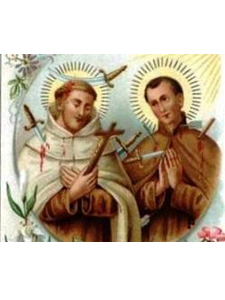 Fr. Redemptus of the Cross, OCD |
||
| Place of Birth: | Portugugal | |
| State: | Braga | |
| Date of Birth | 15 March 1598 | |
| Died On: | 29 November 1638 | |
| Blessed: | 10 June 1900 | |
| Canonized: | ||
| Buried at: | Achen-Jakarta, Indonesia | |
| Feast Day: | ||
Redemptus of the Cross, O.C.D. (also Redemptorus), was a Portuguese lay brother in the Order of Discalced Carmelites. He was put to death along with other members of a group sent to Sumatra by Portuguese authorities. He was born Tomás Rodrigues da Cunha in Paredes de Coura, Portugal on 15 March 1598. He first served as a soldier in the Portuguese army in India, where he joined the Carmelites in Goa as a lay brother in 1615, taking the name Redemptus of the Cross. Brother Redemptus was sent by the superiors of the Order to accompany Father Denis of the Nativity as part of an ambassadorial mission from the Portuguese Empire to the Sultan of Aceh. The mission was led by Dom Francisco Sousa de Castro as ambassador. Once in Aceh, all the members of the mission were seized and arrested,at the instigation of the Dutch authorities based in Jakarta. They were then subjected to torture, and those members of the mission who refused to deny their faith were executed one by one. The two friars were led to a desolate spot on the seashore, where Redemptus was shot with arrows, after which his throat was slit.Father Denis, a crucifix in his hands, was the last to die, his skull shattered by a blow of a scimitar.[
| Blessed Rodolfo Acquaviva | ||
|---|---|---|
 |
||
| Place of Birth: | Italy | |
| State: | ||
| Date of Birth | 2 October 1550 | |
| Died On: | 25 July 1583 | |
| Blessed: | 1893 | |
| Canonized: | ||
| Buried at: | ||
| Feast Day: | 4 February | |
The son of the Duke of Atri, in Italy's Abruzzi region, Rodolfo Acquaviva (1550-1583) came from an illustrious family related to many of the noble houses of Italy. His uncle Claudio held the position of papal chamberlain in the court of Pope Pius V. The duke negotiated for 17-year old Rudolph to take over that post when the uncle resigned so that he could join the Jesuits. Instead of joining the papal court, however, Rudolph wanted to join the Jesuits. He needed several months to gain his father's consent before he could join the Society of Jesus on April 2, 1568.
After he finished novitiate and his studies in the humanities, philosophy and theology, Acquaviva was assigned to the missions in India. He left Rome for Lisbon, Portugal where he was ordained a priest in early 1578. His first assignment in Goa, India, was teaching philosophy to seminarians at St. Paul's College. Then he was sent on one of the great adventures of the early Society of Jesus: to be missionary to the court of Akbar the Great Mogul.
Akbar had an unquenchable thirst for knowledge and a desire to bring peace and harmony to his subjects, the Moslems and Hindus whose religious beliefs were at odds with each other. So he held weekly religious discussions at his court at Fatephur Sikri, near Agra. When he decided to include Christian theologians in these discussions, he sent emissaries to the Jesuit college in Goa to come to his court and instruct him in the Christian faith.
Father Acquaviva and another Jesuit arrived at Akbar's court in 1580, bringing a seven-volume copy of the Bible and hopes that the conversion of India would follow if they could convert the grand mogul. Akbar was greatly interested in Christianity and seemed convinced of its truth, but was not willing to give up his harem. After three years of effort, Acquaviva decided that Akbar would never be converted. The disappointed Jesuit returned to Goa.
Acquaviva became superior of the 12 Jesuits of the mission in Salsette, a peninsula south of Goa. Missionaries had visited there earlier but received a hostile welcome from the predominantly Hindu population, especially after punitive expeditions destroyed their shrines and temples. The Jesuits decided to start a new campaign to promote conversions and to visit all of the peninsula's 66 villages. They decided to start at the south most village of Cuncolim, but were stopped by a local leader who said they could not enter the village because of internal problems. After waiting some hours and hearing increasingly frightening shouts from the village, the Jesuits decided just to plant a cross on the site of a future chapel and to leave. The people who had been secretly watching them summoned hundreds of angry villagers who surrounded the Jesuits, attacking and killing first Acquaviva and then the other four Jesuits who accompanied him, Fathers Peter Berno, Alphonsus Pacheco, Anthony Francis and Brother Francis Aranha.
| Blessed Kunjachan | ||
|---|---|---|
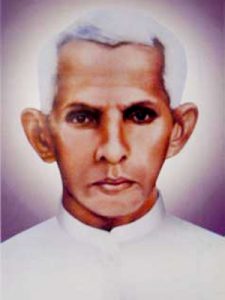 Bl. Kunjachan |
||
| Place of Birth: | Ramapuram | |
| State: | Kerala | |
| Date of Birth | April 1, 1891 | |
| Died On: | October 10, 1973 | |
| Blessed: | April 30, 2006 | |
| Canonized: | ||
| Buried at: | Ramapuram | |
| Feast Day: | 16th October | |
Blessed Kunjachan (Fr. Augustine) was born on 1 April 1891, at Ramapuram in the Syro-Malabar Catholic Diocese of Palai, Kerala, India. He was ordained priest on 17 December 1921.
Fr. Augustine was short of stature and that was the origin of his pet name `Kunjachan' (Little Priest) in the local language, Malayalam. He was just an ordinary priest who could not claim eminence in any field of human activity. But he was humble, kind, service-minded and charitably disposed to the poor and the downtrodden people. He stayed in his own parish, St. Augustine's church Ramapuram as one among the three assistant parish priests for more than 40 years, working specially for the uplift of the Dalits (suppressed people) - the untouchables.
After a brief period of serious illness Kunjachan died on 16 October 1973 at the age of 82. Kunjachan had the reputation of a holy man even while he was alive. People irrespective of caste and religion, used to approach him in their manifold needs and they got favours through his prayers and blessings. Within a few days after his death his tomb at Ramapuram became a centre of pilgrimage for people from far and wide.
The process of Beatification and Canonization started on 11 August 1987 at Ramapuram, bestowing upon him the title, `Servant of God'. The `Positio' on the heroic practice of virtues of the saintly priest was approved by Pope John Paul II on 22 June 2004 and he was declared `Venerable'.
Meanwhile the process of the miraculous cure of the clubfoot of a boy was undertaken, and the findings were sent to Rome for consideration. After a thorough investigation of the miraculous nature of the cure, made by competent personnel in Rome, Pope Benedict XVI approved it, opening the way for Beatification. Venerable Kunjachan was Beatified Card.