
Venerables
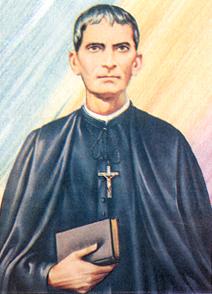
| Agnel de Souza | ||||
|---|---|---|---|---|
 |
||||
| Place of Birth: | ||||
| State: | ||||
| Date of Birth | ||||
| Died On: | 20 November 1927 | |||
| Venerable: | ||||
| Canonized: | ||||
| Buried at: | ||||
| Feast Day: | ||||
Venerable Fr Agnel de Souza, as he is known, was born in the village of Anjuna to Miguel Arcanjo de Souza and Maria Sinforosa Perpetua Magalhães. His parents had nine children, eight sons and a daughter, among whom Agnelo was the sixth child. Even as a small child, all were impressed by his behaviour. From a young age he would remember sermons heard at Mass and would teach doton'n, that is the catechism, to other children, some even older than him. When he was eleven, his parents died suddenly. As his mother was dying, she entrusted her children to the care of Mary, the mother of Jesus.
With the encouragement of an older brother who was already a priest, de Souza pursued a call to the priesthood. He studied philosophy and theology at the Patriarchal Seminary at Rachol. Always in very poor health, he was allowed to live in a private dwelling off the seminary grounds, where he was able to do his studies diligently. He secured the much coveted and singular honor of acessit in his final year of study.
Souza wanted to enter a religious institute, but they had been banned in the lands under the Portuguese Crown since 1835. After much prayer and reflection, de Souza joined the Diocesan Missionary Society of St. Francis Xavier of Pilar on 17 July 1897. He was ordained on 24 September 1898, by the Archbishop of Goa and Patriarch of the East Indies, Dom António Sebastião Valente.
On 8 September 1908, de Souza became a full-fledged member of the Society. His life as a priest took him to Siroda and Sanvordem in Goa, besides Kumta, near Karwar. He was their priest, preacher, confessor and administrator.
The then Archbishop of Goa e Damão and Patriarch of the East Indies Dom Mateus de Oliveira Xavier, appointed Agnel as the Spiritual Director of the Patriarchal Seminary of Rachol on 20 May 1918. Agnel died on the feast of the Sacred Heart of Jesus, which was on 20 November in 1927. He collapsed on the pulpit towards the end of the sermon. He insisted on waiting till the Benediction of the Sacred Heart of Jesus. He died and was buried in Rachol. The parish priest who buried him roughly said these words Hanvem atanch eka Santak matiek laila, which means I have just laid a saint to rest. His remains were brought to Pilar on 10 January 1939.
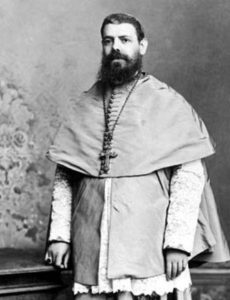
| António José de Sousa Barroso | ||||
|---|---|---|---|---|
 |
||||
| Place of Birth: | Remelhe, Portugal | |||
| State: | Braga | |||
| Date of Birth | 5 November 1854 | |||
| Died On: | 31 August 1918 | |||
| Venerable: | 16 June 2017 | |||
| Canonized: | ||||
| Buried at: | Santa Marinha de Remelhe, Portugal | |||
| Feast Day: | ||||
António José de Sousa Barroso, was a Portuguese missionary bishop whose life united apostolic zeal, pastoral courage, and personal poverty. He was born on 5 November 1854 in Remelhe, near Barcelos, and rose from humble beginnings to become one of the most respected churchmen of his time. His memory has endured not chiefly because of rank, but because he was widely remembered as a shepherd who accepted hardship for the Gospel and for the freedom of the Church.
After his priestly formation, he entered missionary service and devoted important years of his ministry to Africa. He served in territories linked to Portuguese missionary activity, including Mozambique, and became known for tireless pastoral travel and a strong concern for evangelization. His missionary experience shaped him deeply: he was not merely an administrator, but a bishop formed by the realities of distance, poverty, and sacrifice. Later, he was appointed Bishop of Saint Thomas of Mylapore in India, though his time there was brief, because he was soon transferred to Porto, where he would leave his strongest institutional mark.
As Bishop of Porto, António Barroso became known for firmness of conscience, simplicity of life, and closeness to ordinary people. He lived with notable austerity and became associated with the poor, earning a lasting reputation for humility and charity. During the turbulent years of the early twentieth century in Portugal, he also endured exile and political hostility. These trials did not diminish his pastoral identity; rather, they strengthened the image of a bishop willing to suffer rather than compromise his duty. His witness was marked less by dramatic public gestures than by endurance, fidelity, and a deeply missionary spirit.
He died in Porto on 31 August 1918. His remains were later returned to his native Remelhe, where devotion to him continued and where pilgrims now honor his memory. The Church formally recognized the heroic virtues of António José de Sousa Barroso on 16 June 2017, and he is therefore venerated with the title “Venerable.” Though not an Indian figure by birth, he holds a genuine place in India’s Catholic history because he served as Bishop of Saint Thomas of Mylapore, linking his story to the Latin Catholic heritage of Chennai and the old Padroado mission tradition. His life remains a model of missionary obedience, episcopal courage, and love for the poor.
Other Interesting Facts
- He served successively as Prelate of Mozambique, Bishop of Saint Thomas of Mylapore, and Bishop of Porto.
- He is remembered as a missionary bishop closely associated with the poor.
- His life has a direct historical link to India through his governance of the Diocese of Saint Thomas of Mylapore.
- His remains were later transferred to the parish church of Remelhe, strengthening local devotion and pilgrimage.
Key Locations for Pilgrims
Igreja Paroquial de Santa Marinha de Remelhe, Barcelos, Portugal – This parish church is a principal place of devotion connected with António Barroso. His mortal remains were transferred there in 2019 and are kept within the church, making it a clear present-day place for prayerful visitation and remembrance. Pilgrims can visit it today.
Casa de D. António Barroso, Remelhe, Barcelos, Portugal – This house associated with D. António Barroso is identified locally as part of the heritage connected with his life. It stands as a tangible link to his family roots and early life and may be included in a pilgrimage visit to Remelhe today.
Capela de Santiago, Remelhe, Barcelos, Portugal – This chapel forms part of the local landscape connected with the memory of António Barroso in his native parish. It is a specific and identifiable site that pilgrims may visit when tracing places associated with his life.
Estátua do Bispo António Barroso, Barcelos, Portugal – This public monument in Barcelos commemorates him and preserves his memory in his native area. While it is a monument rather than a church, it is a specific present-day site associated with his legacy and can be visited today.
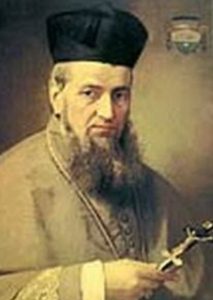
| Anastasius of Altwis | ||||
|---|---|---|---|---|
 |
||||
| Place of Birth: | Altwis, Switzerland | |||
| State: | Canton of Lucerne | |||
| Date of Birth | 24 February 1803 | |||
| Died On: | 24 April 1866 | |||
| Venerable: | 21 December 1998 | |||
| Canonized: | ||||
| Buried at: | The old Cathedral, Patna | |||
| Feast Day: | ||||
Venerable Anastasius of Altwis, born Joseph Alois Hartmann, was a Swiss Capuchin whose life became a striking witness to missionary zeal, pastoral endurance, and practical charity. Born in Altwis in the Canton of Lucerne on 24 February 1803, he came from a simple rural family and was baptized shortly after birth. He entered the Capuchin novitiate in 1821, professed vows in 1822, and was ordained a priest on 24 September 1825. In his early priestly years he served as chaplain, novice master, and teacher of theology and philosophy. Even while engaged in teaching, he carried within him a deep desire for the foreign missions.
That desire finally led him away from Switzerland. After traveling to Rome on foot, he was chosen for mission work in India and arrived in the north of the country in the 1840s. He first labored in Gwalior, and soon his gifts were recognized by the Church. In September 1845 he was appointed the first Vicar Apostolic of Patna, and he was consecrated bishop at Akbar’s Church in Agra on 15 March 1846. Later, on 9 July 1854, he also became Vicar Apostolic of Bombay. His missionary field was not easy. He inherited communities that were poor in resources and weak in institutional support, yet he did not surrender to discouragement.
His greatness lay not only in preaching, but in building the foundations of a stronger local Church. He saw clearly that Catholic education, proper seminary formation, and works of mercy were essential for the lasting growth of the faith. He promoted schools, orphanages, better clergy formation, and a more stable Catholic presence in both Patna and Bombay. He worked with foresight, discipline, and remarkable perseverance, seeking help from abroad and planning institutions that would outlast his own lifetime. Because of this, he is remembered as a missionary who helped revive and strengthen Catholic life in India in a durable way.
He also stands out for his humility and obedience. Though reluctant to accept high office, he embraced difficult responsibilities for the good of the Church. His life joined contemplation with action: a Capuchin spirit of simplicity united with the burdens of episcopal leadership. He died on 24 April 1866 at St. Joseph’s Orphanage in Kurji, Patna, reportedly from cholera, and he was buried in the old Cathedral of Patna. His reputation for holiness endured long after his death, and on 21 December 1998 he was declared Venerable by Pope John Paul II. For India, his memory remains important because he helped shape the institutional and missionary life of the Church during a crucial period of its growth.
Other Interesting Facts
- He entered the Capuchin novitiate on 17 September 1821.
- He was ordained a priest on 24 September 1825.
- He served both Patna and Bombay as Vicar Apostolic during his missionary career.
- He is remembered in Indian Catholic historical writing as a major force in reviving missionary life through education, clergy formation, and charitable institutions.
- His cause was opened in the early twentieth century, and his recognition as Venerable came much later, reflecting a long-standing reputation for holiness.
Key Locations for Pilgrims
Akbar’s Church, Agra – This historic church in Agra is the place where he received episcopal ordination on 15 March 1846, when he became Vicar Apostolic of Patna and Titular Bishop of Derbe. It remains a clearly identifiable historic Catholic site associated with a decisive moment in his life, and pilgrims can visit it today.
Not specified – Although he died at St. Joseph’s Orphanage in Kurji and was buried in the old Cathedral of Patna, the available sources consulted here do not clearly identify a presently verified, distinct, visitable shrine, tomb, or marked devotional site directly connected with him for confident listing in booklet form.
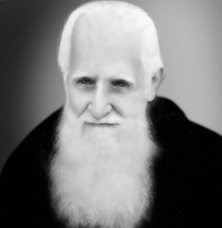
| Aurelian OCD | ||||
|---|---|---|---|---|
 |
||||
| Place of Birth: | ||||
| State: | ||||
| Date of Birth | ||||
| Died On: | November 16, 1963 | |||
| Venerable: | March 26, 1999 | |||
| Canonized: | ||||
| Buried at: | ||||
| Feast Day: | ||||
Venerable Fr. Aurelian OCD, The Spanish Carmelite missionary who lived in India for more than 50 years trained over 1,500 priests in Kerala as a theologian, professor and spiritual director. He was born at Archunduaga, Basauri near Bilbao Province in Spain. He arrived in India on October 9, 1912. Fr. Aurelian was the spiritual director (1914-44), vice rector (1934-44 and rector (1944-56) of the St. Joseph’s Pontifical Seminary, Aluva. His mortal remains are preserved at the Immaculate Conception Church, Manjummel. He died on November 16, 1963 at Aluva. He was elevated to the status of Servant of God on December 17, 1980, and that of Venerable on March 26, 1999.
| Fernanda Riva | ||||
|---|---|---|---|---|
 |
||||
| Place of Birth: | ||||
| State: | ||||
| Date of Birth | 17 April 1920 | |||
| Died On: | 22 January 1956 | |||
| Venerable: | 28 June 2012 | |||
| Canonized: | ||||
| Buried at: | ||||
| Feast Day: | ||||
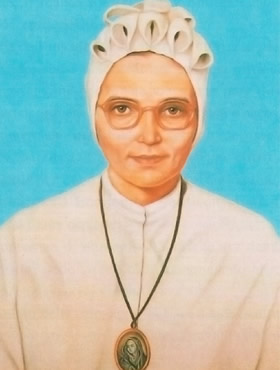
Venerable Sr. Fernanda Riva(1920–1956), was a Roman Catholic Nun of Canossian Daughter of Charitycongregation. She was born on 17 April 1920 in Monza, Italy. She came to Mumbai, India on 30 October 1939. Sr. Fernanda was Principal of the St. Joseph’s College for Women Alleppey, Kerala. She was admitted to St. Elizabeth’s Nursing Home for the Cancer treatment under the supervision of Late Dr. Arthur D’Sa. She died on 22 January 1956 in Mumbai, India. She was raised as 'Servant of God' on 13 August 1994 by His Eminence Simon Cardinal Pimenta. on 28 June 2012 she was declared 'Venerable' by Pope Benedict XVI.
| Francesco Convertini, SDB | ||||
|---|---|---|---|---|
 |
||||
| Place of Birth: | ||||
| State: | ||||
| Date of Birth | 29 August 1898 | |||
| Died On: | 11 February 1976 | |||
| Venerable: | ||||
| Canonized: | ||||
| Buried at: | ||||
| Feast Day: | ||||
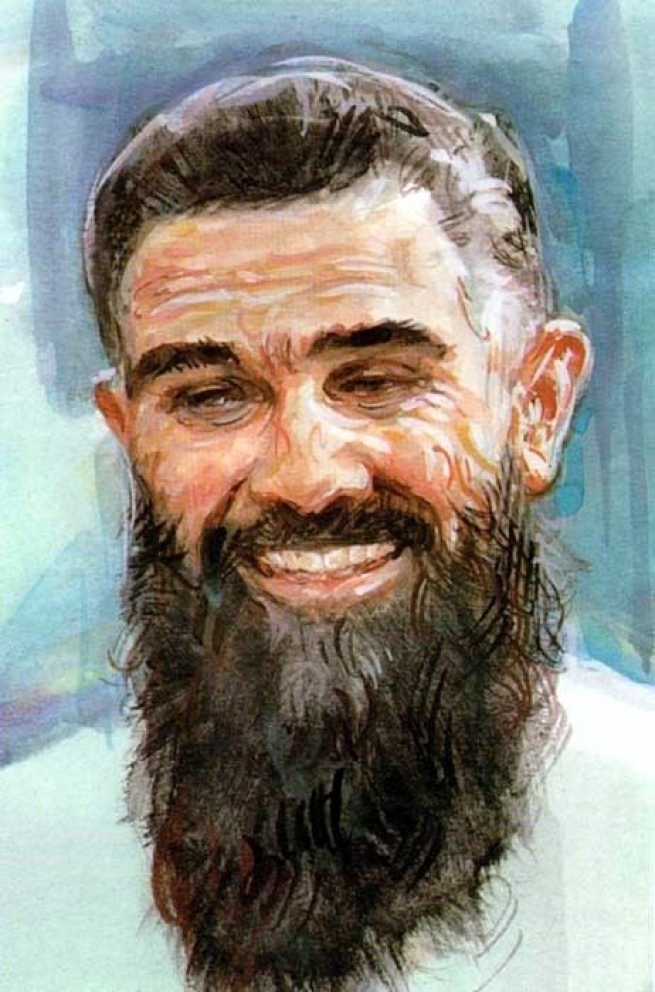
Venerable Fr. Francesco Convertini, SDB was born in the Papariello district of Locorotondo (Bari) on 29 August 1898. He was called up for military service during World War I. He was wounded, taken prisoner and taken to Poland. When he returned home he said "yes" to the Lord's call that he had discerned through the mediation of Fr Angelo Amadei and the Cagliero community in Ivrea.
He set out from Genoa to India after receiving the Missionary Crucifix from the hands of Blessed Fr Philip Rinaldi. He was a novice of Venerable Stephen Ferrando and a disciple of Archbishop Louis Mathias and the Servant of God Fr Constantine Vendrame, and was distinguished for his exceptional apostolic zeal. His mission field was Bengal where he had a huge number of friends and spiritual children, both ignorant and learned, both rich and poor. He was the only missionary who could enter a house of Hindus or Muslims. He went continually from village to village, on horseback, by bicycle or better on foot with nothing but his backpack. In this way, he could meet many people and talk to them about Christ.
It gave of himself equally to all: Muslims, Hindus and Christians. He was loved by all and revered as a master of interior life with the wisdom of heart that he possessed in abundance. He was devoted to the Blessed Virgin and died on 11 February 1976 murmuring: "My Mother, I have never displeased you in all my life. Help me now!" All during life he was able to accept others and to meet people with his heart, his goodness and his humanity. This is the legacy he has handed on to us and especially to the new generations.
Fr Convertini was not a man for theory. He was very practical and was able to branch out in many directions with the values and ideals of the Gospel. He understood mercy not as a vague sentimental emotion but in the concrete practice of all the corporal and spiritual works of mercy.
| Geevarghese Mar Ivanios | ||||
|---|---|---|---|---|
 |
||||
| Place of Birth: | Mavelikara, India | |||
| State: | Kerala | |||
| Date of Birth | 21 September 1882 | |||
| Died On: | 15 July 1953 | |||
| Venerable: | 14 March 2024 | |||
| Canonized: | ||||
| Buried at: | St. Mary’s Cathedral, Thiruvananthapuram | |||
| Feast Day: | ||||
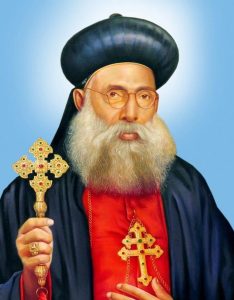
Venerable Geevarghese Mar Ivanios stands among the most influential Christian leaders of modern India. Born as P. T. Geevarghese on 21 September 1882 at Puthiyakavu in Mavelikara, Kerala, he belonged to the Malankara Syrian tradition from childhood. He showed unusual intelligence, discipline, and spiritual seriousness from an early age. After his early schooling, he was taken for higher studies and priestly formation, and he later pursued advanced education at Madras Christian College, where he earned a master’s degree with distinction. Because of this, he became widely known as “M.A. Achan,” a sign of both learning and respect.
He was ordained deacon in 1900 and priest in 1908. In his early ministry he served as an educator, principal, and later professor, and he became known for his zeal in preaching, catechesis, and renewal. His spiritual life deepened through prayer, study, and a growing conviction that the Church in India needed a more rooted and disciplined religious witness. This led him to found Bethany Ashram in 1919, a major step in shaping indigenous monastic life within the Malankara tradition. He also founded the women’s congregation later known as the Sisters of the Imitation of Christ.
In 1925 he was consecrated bishop and took the name Mar Ivanios. His life then entered its most decisive phase. Burdened by ecclesial division, he worked for what became known as the Malankara Reunion Movement. In 1930, together with a small group, he made the Catholic profession of faith, seeking full communion with Rome while preserving the authentic heritage of the Malankara Syriac tradition. This was not a move of convenience, but of conscience, prayer, sacrifice, and immense courage. In 1932, the Holy See established the Syro-Malankara Catholic hierarchy, and Mar Ivanios became its first Metropolitan Archbishop.
His later years were marked by tireless pastoral labor. He helped build institutions, schools, missions, and parishes, and he gave the Syro-Malankara Catholic Church durable form and direction. He suffered opposition, misunderstanding, and hardship, yet remained steadfast, prayerful, and deeply committed to unity and holiness. He died in Thiruvananthapuram on 15 July 1953. For the Church in India, his importance is immense: he united fidelity to the Eastern Christian inheritance with communion with the universal Catholic Church. On 14 March 2024, Pope Francis recognized his heroic virtues and the Church conferred on him the title Venerable, confirming the enduring witness of his holy life.
Other Interesting Facts
-
-
- He was the founder of Bethany Ashram, one of the landmark indigenous religious foundations associated with the Malankara tradition in India.
- He is remembered as a principal architect of the Malankara Reunion Movement
- He became the first head of the Syro-Malankara Catholic hierarchy when it was established in 1932.
- His tomb at Pattom remains a living center of devotion and annual commemoration.
- The cause for his canonization was set in motion in 1997, and he was declared Servant of God in 2007 before being declared Venerable in 2024.
-
Key Locations for Pilgrims
St. Mary’s Malankara Syrian Catholic Cathedral, Pattom, Thiruvananthapuram – This cathedral is the most important pilgrimage site connected with Mar Ivanios. He laid its foundation in 1950, and his tomb is located there. It remains a major place of prayer and public veneration, and pilgrims can visit it today.
Bethany Ashram, Perunad, Pathanamthitta District – Founded by Mar Ivanios on 15 August 1919, this is a central site in his spiritual and monastic legacy. It is directly linked to his vision for an indigenous form of consecrated life in the Malankara tradition, and it is a visitable place associated with his mission and religious foundations.
Puthiyakavu, Mavelikara, Kerala – This is the clearly identified birthplace locality of Mar Ivanios. It is connected to his earliest life and family origins and remains a place remembered in pilgrim commemorations connected with his memory. A specific shrine or preserved birthplace house is not clearly specified in the available sources.
| John Vincent of Jesus Mary OCD | ||||
|---|---|---|---|---|
 |
||||
| Place of Birth: | ||||
| State: | ||||
| Date of Birth | ||||
| Died On: | February 27, 1943 | |||
| Venerable: | January 12, 1996 | |||
| Canonized: | ||||
| Buried at: | ||||
| Feast Day: | ||||
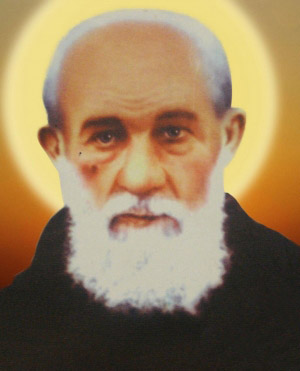
Venerable Fr. John Vincent of Jesus Mary OCD, The Spanish Carmelite missionary, Fr. John Vincent of Jesus Mary OCD evangelized Kerala for 17 years, having landed at Verapoly Archdiocese in the year 1900. After spending four years in spiritual ministries in the island of Varapuzha, he was appointed the parish priest and vicar forane of Mount Carmel Church, Chathiath during 1911-1912. Called back to Spain for higher responsibilities, he died there on February 27, 1943. Saint Pope John Paul II elevated him to the status of Servant of God and later to the status of Venerable on January 12, 1996.
| Joseph Panjikaran | ||||
|---|---|---|---|---|
 |
||||
| Place of Birth: | Uzhuva, India | |||
| State: | Kerala | |||
| Date of Birth | 10 September 1888 | |||
| Died On: | 4 November 1949 | |||
| Venerable: | 18 December 2025 | |||
| Canonized: | ||||
| Buried at: | Dharmagiri, Kothamangalam | |||
| Feast Day: | ||||
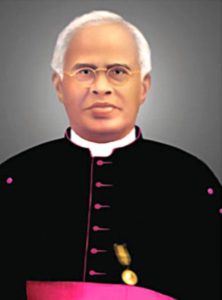
Venerable Joseph Panjikaran was a priest of the Syro-Malabar Church whose life joined scholarship, pastoral zeal, and practical charity in a remarkable way. Born on 10 September 1888 at Uzhuva near Cherthala in Kerala, he grew up in a Catholic family and was formed within the rich spiritual tradition of the St. Thomas Christians. From his early years, he showed intellectual promise and later pursued higher studies before entering priestly formation. He was eventually ordained a priest in 1918, offering his life to the service of Christ and the Church.
As a diocesan priest, Father Joseph Panjikaran became known not only for pastoral dedication but also for his learning. He was respected as a historian, theologian, and writer. Yet his holiness did not remain confined to study or administration. Through his ministry, he encountered the suffering of the poor, the sick, and the abandoned. These encounters shaped the defining conviction of his life: that the Church must proclaim the Gospel not only through words, but also through compassionate service, especially through care for the suffering.
This conviction took visible form in 1934, when he established Dharmagiri at Kothamangalam. In an age when organized Catholic healthcare in that setting was still limited, he saw the healing ministry as a deeply evangelical work. He understood the sick person not as a burden, but as Christ to be served. Dharmagiri became the practical expression of mercy, where bodily care and Christian love met in one mission.
His vision grew further when he founded the Congregation of the Medical Sisters of St. Joseph. Permission was granted in 1944, and the congregation was canonically established in 1946. Through this foundation, he gave the Church a lasting body of consecrated women dedicated to nursing, healing, and service. This was not merely institutional work; it was the fruit of a deeply spiritual insight that charity must be organized, sustained, and offered with reverence. In founding this congregation, he created a living legacy that continues beyond his lifetime.
He endured the burdens that often accompany pioneering work: responsibility, sacrifice, constant service, and the physical strain of leadership. Even so, he remained steadfast in pastoral commitment. He died on 4 November 1949 at Kothamangalam. His memory endured among the faithful, especially through the institutions and religious community that carried forward his mission.
For the Church in India, Venerable Joseph Panjikaran stands as a witness to a distinctly Indian expression of Catholic holiness: learned yet humble, practical yet deeply prayerful, rooted in the Syro-Malabar tradition yet universal in charity. His life reminds the faithful that sanctity can shine through scholarship, priestly fidelity, and compassionate medical service. The recognition of his heroic virtues by the Church confirms what many had long believed—that his life was a quiet but radiant offering of mercy in the name of Christ.
Other Interesting Facts
- He is especially remembered as a pioneer of Catholic healthcare ministry in Kerala.
- He was associated not only with pastoral work but also with historical and theological scholarship.
- His cause for canonization was opened in 2010, and he was formally declared a Servant of God before being recognized as Venerable in 2025.
- His legacy continues most visibly through the Medical Sisters of St. Joseph and their apostolate of healing.
Key Locations for Pilgrims
Dharmagiri, Kothamangalam, Kerala – This is the principal place most directly associated with Venerable Joseph Panjikaran’s life and mission. He established Dharmagiri as a center of Christian charity and healing, and it became the heart of his medical apostolate. Pilgrims can visit the campus today as the historic center of his service to the sick and poor.
Cemetery attached to Dharmagiri, Kothamangalam, Kerala – His mortal remains are buried here. This makes it the most important identifiable devotional site linked to his death, memory, and continuing veneration. Pilgrims can visit this burial place today in connection with his cause.
MSJ Mother House / Generalate, Kothamangalam, Kerala – The Mother House of the Medical Sisters of St. Joseph stands as the enduring institutional legacy of his vision. It remains a living witness to the congregation he inspired for the care of the sick, and pilgrims may visit it as a place connected to his spiritual and charitable heritage.
| Joseph Vithayathil | ||||
|---|---|---|---|---|
 |
||||
| Place of Birth: | ||||
| State: | ||||
| Date of Birth | 23 July 1865 | |||
| Died On: | 08 June 1964 | |||
| Venerable: | 14 December 2015 | |||
| Canonized: | ||||
| Buried at: | ||||
| Feast Day: | ||||
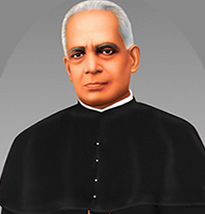
Venerable Joseph Vithayathil was a priest from India who has been declared as Venerable by the Catholic Church. He was born in Puthenpally, Trichur District of Kerala State of India to Catholic parents of the Vithayathil family on 23 July 1865. He had two brothers and two sisters.
At the suggestion of his parish priest Fr. Zecharias, he started priestly studies and joined the seminary on 30 May 1881. He was ordained as Priest on 11 March 1894 by Bishop Mar Adolph Medlycott of Thrissur Diocese at the St. Antony's Church, Ollur with 11 others.
After being diocesan priest for a few years, in 1902 he was sent to perform exorcisms on a young mystic girl called Mariam Thresia. Here he became her Spiritual director until her death in 1926. He asked her to write her life story from early childhood, on the instructions of his Bishop. This resulted in the Autobiographical Notes of Blessed Mariam Thresia dealing with her life experiences and events up to 1905.
He helped her establish the Congregation of the Holy Family on 14 May 1914 blessed by Mar John Menachery. He was appointed as the Chaplain of this convent in 1922. After the death of the Mariam Thresia, he guided the congregation until the formation of its General Council in 1942. Under his guidance a school for teaching stitching, tailoring, weaving, knitting etc. was started in 1929 at Kuzhikkattussery.
He died on 08 June 1964 (same date on which Mariam Thresia died) and was buried at Kuzhikkattussery near the tomb of Mariam Thresia. He was declared as Servant of God on 18 May 2004 by Pope John Paul II. Mar Paul Alapatt, the current bishop of Ramanathapuram Diocese, was the Promotor of Justice for the Cause of the Servant of God Fr. Joseph Vithayathil. He was elevated to Venerable on 14 December 2015 by Pope Francis along with 16 others.
| Maria Celine Kannanaikal, UMI | ||
|---|---|---|
 |
||
| Place of Birth: | Kundannur | |
| State: | Kerala | |
| Date of Birth | 13 February 1931 | |
| Died On: | 26 July 1957 | |
| Venerable: | 5 August 2022 | |
| Canonized: | ||
| Buried at: | Mother House, Kannur | |
| Feast Day: | ||
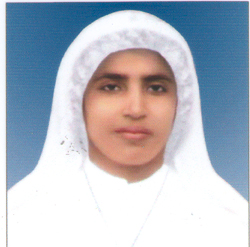
Venerable Maria Celine Kannanaikal, UMI, was born on 13 February 1931 at Kundannur in Kerala, in a Catholic family shaped by faith and prayer. From her earliest years, her life appears to have been marked by a quiet seriousness of spirit. She belonged by origin to the Syro-Malabar Catholic tradition, yet her religious vocation unfolded in the Congregation of the Ursuline Sisters of Mary Immaculate, a sign of her generous readiness to go wherever God called her.
Before entering religious life, she received her schooling, completed teacher training, and worked as a teacher in two schools. This period of service is important, for it shows that her holiness was not born in isolation, but in ordinary duty, discipline, and responsibility. She entered the Ursuline convent in Kannur on 24 June 1954 and began her novitiate on 26 December 1954. Her path, however, was not easy. During formation she endured misunderstanding and opposition, especially in connection with the mystical experiences reported during her novitiate. Yet her superiors discerned in her not instability, but sincerity, humility, and holiness.
Maria Celine’s spiritual life was marked by a profound love for the Crucified Lord. Accounts associated with her cause describe extraordinary interior trials, deep suffering, and mystical favors, including visions and a strong call to pray for sinners. What stands out most is not the unusual character of these experiences, but the way she responded to them: with surrender, endurance, and a willing acceptance of suffering in union with Christ. Her life became a hidden offering.
After an extended novitiate, she was finally admitted to first profession on 20 June 1957. Very soon afterward, she fell gravely ill. Her illness remained undiagnosed, and her earthly life came to an end in Kannur only thirty-five days after her profession. Her short life, and especially the final stretch of suffering after she had at last offered herself fully in vows, gave her witness a striking spiritual power. It is precisely this combination of hiddenness, suffering, fidelity, and perseverance that has moved many faithful to remember her with affection and reverence.
Her cause for sainthood was opened in 2007, and on 5 August 2022 Pope Francis authorized the decree recognizing her heroic virtues, granting her the title Venerable. For the Church in India, her life is a luminous example that sanctity can flourish in silence, in misunderstood suffering, and in a life outwardly brief but inwardly complete. Her legacy continues through prayer, devotion at her tomb, and the inspiration she gives to those who seek holiness through humility, purity of intention, and trust in God’s will.
Other Interesting Facts
- She was declared Venerable on 5 August 2022, when her heroic virtues were officially recognized.
- She made her first religious profession on 20 June 1957.
- She died only 35 days after her first profession, a detail often noted in accounts of her life.
- Her cause for beatification was opened in July 2007.
- Her mortal remains were exhumed in 2012 and reburied in the chapel of the UMI Mother House at Payyambalam, where devotion to her continues.
- She is remembered in a special way as an Indian woman religious whose holiness was closely associated with humility, suffering, and fidelity under trial.
Key Locations for Pilgrims
Chapel of the Mother House of the Ursuline Sisters of Mary Immaculate, Payyambalam, Kannur, Kerala – This is the present resting place of Venerable Maria Celine Kannanaikal. After her cause advanced, her mortal remains were exhumed and reburied here in a new tomb in 2012. It is directly connected to her ongoing devotional legacy, and pilgrims can visit it today.
Our Lady of Carmel Church, Kundannoor, Kerala – This church is connected with her earliest life and baptism. It remains a specific and identifiable place linked to her beginnings in the faith, and it is a meaningful site for those wishing to reflect on the roots of her vocation.
| Mary Glowrey, JMJ | ||||
|---|---|---|---|---|
 |
||||
| Place of Birth: | Birregurra, Australia | |||
| State: | Victoria | |||
| Date of Birth | 23 June 1887 | |||
| Died On: | 5 May 1957 | |||
| Venerable: | 21 November 2025 | |||
| Canonized: | ||||
| Buried at: | St Patrick’s, Bengaluru | |||
| Feast Day: | ||||
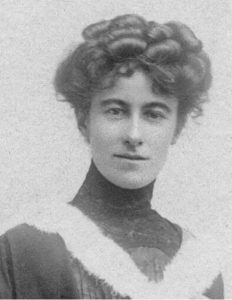
Venerable Mary Glowrey, known in religion as Mary of the Sacred Heart, was born in Birregurra, Victoria, on 23 June 1887. From an early age she showed unusual intellectual ability and perseverance. She pursued her studies with distinction and entered the University of Melbourne, where she completed her medical training and later earned further qualifications. At a time when women in medicine were still rare, she overcame real social and professional barriers and established herself as a capable and respected doctor.
Before entering religious life, she worked in major hospitals in Melbourne and also served the poor in practical, direct ways. Her Catholic faith deepened alongside her medical vocation, and she came to see healing not only as professional work, but as a form of Christian charity. In 1920, at the age of thirty-two, she left Australia for India. She never returned to her homeland. In Guntur, she entered the Congregation of Jesus Mary Joseph and took the name Mary of the Sacred Heart.
Her path was extraordinary. At that time, Church law did not ordinarily permit women religious to practise medicine. Mary Glowrey received special papal permission to live both callings fully: consecrated religious life and active medical service. This made her a true pioneer. In India, she dedicated herself especially to women, children, and the poor, many of whom had little or no access to healthcare. Her work joined professional competence, missionary zeal, and deep compassion.
What began as modest medical service grew into enduring institutions. The dispensary associated with her early work developed into St Joseph’s Hospital in Guntur. She also trained local women as nurses, midwives, and dispensers, helping create systems of care that would outlast her own lifetime. In 1943, she founded what became the Catholic Health Association of India, a work of immense long-term significance for Catholic healthcare in the country. Through this, her influence extended far beyond one clinic or one town.
Her life was marked by sacrifice, hidden fidelity, and perseverance. She lived far from her family, bore the burdens of mission life, and continued her service for decades. She died in Bangalore on 5 May 1957. The Church later opened her cause, first recognizing her as Servant of God in 2013, and on 21 November 2025 Pope Leo XIV recognized her heroic virtues, giving her the title Venerable.
Mary Glowrey remains important both to the universal Church and to India. She stands as a luminous example of holiness expressed through healing, discipline, and practical love. Her legacy continues wherever Catholic healthcare serves the vulnerable, and her witness still speaks powerfully to doctors, religious, missionaries, and all who see service to the suffering as service to Christ.
Other Interesting Facts
-
- She is recognized as the first Catholic religious sister permitted to practise as a doctor.
- She spent 37 years serving in India after leaving Australia in 1920.
- She never returned to Australia after departing for India.
- Her cause for canonization was initiated in India by the Bishop of Guntur.
- She is one of the very few Australian-born Catholics to have reached the title of Venerable.
Key Locations for Pilgrims
St Patrick’s Cemetery, Hosur Road, Bengaluru, Karnataka, India – This is the documented place of Mary Glowrey’s burial after her death in 1957. It remains a concrete place of remembrance linked to her final earthly resting place, and pilgrims can visit it today.
St Joseph’s Hospital, Guntur, Andhra Pradesh, India – The small dispensary where she began her medical mission developed into St Joseph’s Hospital. It stands as one of the clearest living institutions connected to her healing ministry and long service among the poor, and it remains visitable today.
St Joseph’s Convent, Guntur, Andhra Pradesh, India – Mary Glowrey lived here after arriving in India in 1920, entered the JMJ congregation there, and from this base carried forward her missionary and medical work. It is directly tied to her religious vocation and legacy in Guntur.
Mary Glowrey Museum, Cathedral Hall, Level 2, 20 Brunswick Street, Fitzroy, Victoria, Australia – This museum was established to preserve and present her life, work, and legacy. It is a specific present-day place where pilgrims, students, and the faithful can learn about her vocation and mission.
St Patrick’s Cathedral, East Melbourne, Victoria, Australia – Mary Glowrey was a parishioner here for many years during her Melbourne life before leaving for India. It remains a meaningful place of spiritual association for those tracing her early Catholic formation.
| Mathew Kadalikkattil | ||||
|---|---|---|---|---|
 |
||||
| Place of Birth: | ||||
| State: | ||||
| Date of Birth | ||||
| Died On: | ||||
| Venerable: | 27th June 2011 | |||
| Canonized: | ||||
| Buried at: | ||||
| Feast Day: | ||||
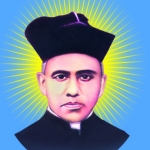
Venerable Fr.Mathew Kadalikkattil was a fervant devotee of the Sacred Heart of Jesus and a man of compassionate heart whose love for God found expression in the concern for the poor and forlorn. As a parish priest he was very much like the ' Cure De Ars' who spent long hours in the confessional and brought about changes in the lives of many sinners.
He spent time, energy and resources for the spiritual and material well-being of the sheep in his fold, caring for each and every member especially the downtrodden and the forlorn.He called himself 'Servant of the Sacred Heart' and promoted devotion to the Sacred Heart of Jesus through word,deed and exemplary life.
His heart ached seeing the sufferings of the aged, destitute, the orphaned children and the sad plight of the poor young women including widows.
Fr.Mathew sought a solution for all these problems in the Heart of Jesus. He spent long hours on his knees before the Blessed Sacrament and finally he was inspired to start a new religious congregation for women , who would care for the destitute and the orphaned . He started working for it. But he found hurdles on his path.
He kept trusting in the Divine providence. This man of prayer practiced the virtues of humility , meekness, love of God and man in a heroic manner and he became widely known as a saintly priest even when he was alive. On 27th June 2011 Pope Benedict XVI approved the heroic practice of virtues of Fr. Mathew Kadalikkattil and declared him as venerable
| Mathew Makil | ||||
|---|---|---|---|---|
 |
||||
| Place of Birth: | Manjoor, India | |||
| State: | Kerala | |||
| Date of Birth | 27 March 1851 | |||
| Died On: | 26 January 1914 | |||
| Venerable: | 22 May 2025 | |||
| Canonized: | ||||
| Buried at: | St. George Church, Edakattu | |||
| Feast Day: | ||||
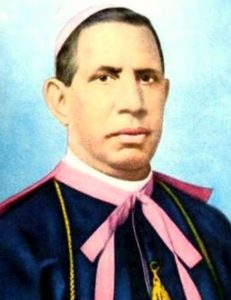
Venerable Mathew Makil stands among the most significant church leaders in the history of the Syro-Malabar Church in India. Born on 27 March 1851 at Manjoor in Travancore, he grew up in a deeply religious family atmosphere that helped shape his early piety and sense of vocation. From childhood he was drawn toward prayer, reverence, and the service of God. He began formal priestly formation at Mannanam in 1865 and continued at the major seminary of Varapuzha from 1866. He was ordained a priest on 30 May 1874.
As a priest, Fr. Mathew Makil served in seminary teaching, parish ministry, and diocesan administration. His superiors entrusted him with increasing responsibility, and he became known for discipline, learning, honesty, and pastoral dedication. In 1889 he was appointed Vicar General for the Southists in the Vicariate of Kottayam, a role of major importance in a sensitive ecclesial context. Later, in the reorganization of the Syrian vicariates in 1896, he was appointed Vicar Apostolic of Changanacherry, becoming the first indigenous bishop to hold that office. In 1911, when the Vicariate of Kottayam was erected for the Knanaya Catholics, he became its first Vicar Apostolic.
His pastoral legacy was not limited to administration. He founded the Sisters of the Visitation of the Blessed Virgin Mary in 1892, with a special concern for the spiritual growth, education, and uplift of women. He also strengthened church life through writing, governance, and catechetical order. Sources associated with his legacy credit him with publishing a Book of Decrees in 1904, issuing pastoral letters, and promoting orderly catechetical teaching. His life reveals a bishop who combined firmness with compassion, and structure with spiritual fatherhood.
His final illness came in January 1914, shortly after preaching at Edacat. He died at Kottayam on 26 January 1914, after offering his blessing and preparing himself in faith for death. He was buried at Edacat, where devotion to him continues. His cause advanced when he was declared a Servant of God in 2009, and on 22 May 2025 the Holy See recognized his heroic virtues, giving him the title of Venerable. For the Church in India, he remains a model of faithful leadership, pastoral courage, and holy service during a formative period in the life of the Syro-Malabar Church.
Other Interesting Facts
- He was ordained a priest on 30 May 1874 by Archbishop Leonard Mellano of Varapuzha.
- He founded the Sisters of the Visitation of the Blessed Virgin Mary in 1892.
- He is remembered as the first indigenous Vicar Apostolic of Changanacherry and the first Vicar Apostolic of Kottayam. He is associated with the publication of a diocesan Book of Decrees in 1904 and with strong catechetical organization.
- The Holy See officially recognized his heroic virtues on 22 May 2025.
Key Locations for Pilgrims
St. George Knanaya Catholic Forane Church, Edacat, Kottayam – This is the clearest and most important pilgrimage site connected with Venerable Mathew Makil. His body was buried here after his death in 1914, and his tomb remains a place of prayer and intercession. The site is openly associated with his memory and is visited today by the faithful.
Mar Makil Museum, Kottayam – This museum preserves his memory and legacy for pilgrims and visitors. It is identified in Kerala tourism material as a visitable site connected with him in Kottayam, making it a practical devotional stop for those seeking to learn more about his life and work today.
Christ the King Cathedral, Kottayam – While not his burial site, this cathedral is a major public place of remembrance within the Archeparchy historically linked to the vicariate he led. It has also been used for public observances connected with his cause, so pilgrims can visit it as an important legacy site in Kottayam today.
| Michael Koodalloor OFM Cap | ||||
|---|---|---|---|---|
 |
||||
| Place of Birth: | Kottapuram, India | |||
| State: | Kerala | |||
| Date of Birth | 20 July 1913 | |||
| Died On: | 4 April 1968 | |||
| Venerable: | 21 February 2026 | |||
| Canonized: | ||||
| Buried at: | Ponnurunni, Kochi, | |||
| Feast Day: | ||||
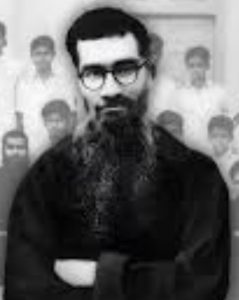
Venerable Fr. Michael Koodalloor, later known in religion as Theophane of Kottappuram, was born on 20 July 1913 in Kottapuram in Kerala. He was raised in a Christian family environment that gave him a firm spiritual grounding from an early age. His baptismal name was Michael, and as a boy he received the kind of formation that quietly prepared him for a life of service to God and to souls. His early education led him onward to the minor seminary of the Archdiocese of Verapoly, where his priestly calling began to take clearer shape.
As he deepened his understanding of the Gospel and encountered the spirit of Saint Francis of Assisi, he was drawn toward the Franciscan Capuchin way of life. He entered the Capuchin convent at Farangipet and on 31 October 1933 he received the Franciscan habit, taking the name Theophane. He made his first profession in 1934. In due course, after his religious and priestly formation, he was ordained a priest on 20 April 1941. His priesthood was marked from the beginning by seriousness, humility, and a practical love for the people entrusted to him.
His ministries were varied and fruitful. He served in the formation of postulants, worked in pastoral care, and took part in the Capuchin missionary preaching apostolate, especially in retreats and spiritual exercises. In 1947 he became guardian of the Sacred Heart Convent at Kunnam. He later served as parish priest in Tiruchirapally and then at Kotagiri, where he also taught Sacred Scripture and homiletics in the local Capuchin theological seminary. He was not only a preacher, but also a teacher who guided minds patiently and clarified doubts with generosity.
Alongside his formal assignments, Fr. Theophane served as chaplain to various women’s religious congregations and devoted himself to pastoral and social work among different sections of Indian society, including the poor and those pushed to the margins by caste divisions. His ministry was remembered not merely for activity, but for tenderness. People saw in him a priest who listened, prayed, and gave himself without reserve. He combined Franciscan simplicity with a deeply pastoral heart.
In his later years he was transferred to Ponnurunni. There he built a convent dedicated to Saint Bonaventure, together with a church and a seminary for Capuchin vocations. This work stands as one of his lasting visible contributions to the Church. Yet those who cherished him remembered not buildings first, but the man himself: humble, approachable, prayerful, detached from comfort, and especially available to the poor, the troubled, and the spiritually burdened. His reputation as a gifted Capuchin preacher spread widely, and many regarded him even in his lifetime as a holy priest.
He died at Ponnurunni on 4 April 1968. After his death, devotion to him did not fade; it grew. The faithful continued to visit his tomb, seek his intercession, and preserve the memory of his holiness. On 21 February 2026, the Church formally recognized his heroic virtues, and he was declared Venerable. For the Church in India, and especially for Kerala, his life remains a witness that sanctity can shine through hidden service, deep prayer, love for the poor, and faithful priestly endurance.
Other Interesting Facts
- He took the religious name Theophane when he received the Capuchin habit.
- He was widely remembered as one of the most esteemed Capuchin preachers of his time in his region.
- He taught Sacred Scripture and homiletics, joining intellectual formation with pastoral service.
- His life was associated with strong devotion among the faithful even before the formal recognition of his heroic virtues.
- Some devotees compared his manner of receiving and praying for people to that of Padre Pio, reflecting the depth of his spiritual reputation.
Key Locations for Pilgrims
Fr. Theophane’s Tomb & Pilgrim Center, Ponnurunni, Kochi, Kerala – This is the principal place of devotion associated with him today. It preserves his tomb and functions as an active pilgrimage center where the faithful continue to visit, pray, and remember his life and priestly holiness.
St. Bonaventure Friary, Capuchin Ashram, Ponnurunni, Kochi, Kerala – This is the Capuchin house linked with the foundation he established after his transfer to Ponnurunni. He helped build the convent there, together with a church and a seminary for Capuchin vocations, making it one of the most important living memorials of his legacy. Pilgrims can identify this as a major site connected with his final years of ministry.
Kottapuram, Kerala – A precise, clearly identified present-day birthplace house or shrine is Not specified. The village remains connected with his origins, but a specific publicly established pilgrimage site tied to his birth is not clearly identified in the available record.
| Stephen Ferrando | ||||
|---|---|---|---|---|
 |
||||
| Place of Birth: | ||||
| State: | ||||
| Date of Birth | 28 September 1895 | |||
| Died On: | 21 June 1978 | |||
| Venerable: | ||||
| Canonized: | ||||
| Buried at: | ||||
| Feast Day: | ||||
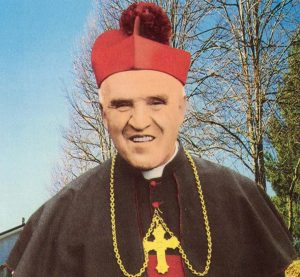
Venerable Stephen Ferrando was born on 28 September 1895 in Genoa. Ferrando was ordained to the priesthood on 18 March 1923 at the Salesian Institute of Borgo San Martino in Alessandria.
A few months later he was assigned to serve in British India as part of the third batch of missionaries dispatched. Ferrando left Venice on 2 December 1923 along with nine other companions, reaching Shillong – then the capital of the Assam province of British India and headquarters of the Prefecture Apostolic of Assam – on 23 December. There he was entrusted with the task of forming future missionary personnel for the Prefecture, serving as the Master of Novices. He also served as the catechist and then the Rector of Our Lady's House in Shillong and in 1929, became a Council Member of the Provincial team of the Salesians in the diocese. At that time, the Holy See had entrusted the Archdiocese of Madras as well as the diocese of Krishnanagar and also the Prefecture Apostolic of Assam to the Salesians.
On 9 July 1934, Ferrando was appointed as the bishop of Krishnanagar in Nadiab, the island-city in the province of Bengal; he choose Apostolus Christi ("An apostle for Christ") as his motto. He received – from the Archbishop of Calcutta – his episcopal consecration on the following 10 November. When the Prefecture of Assam was elevated as the bishopric of Shillong shortly after, Ferrando was transferred as the Bishop of Shillong as its second bishop on 26 November 1935, a position he held until 26 June 1969 when he retired (The diocese was then promoted to an archdiocese, so that his successor was an archbishop).
The new diocese was faced with many challenges, none greater than the shortage of personnel. Ferrando immediately threw himself into the work of increasing the diocesan personnel. On 18 March 1932, he wrote to the Rector Major of the Salesians: "St. Francis Xavier made that emotional appeal to the studious youth of his times. From the same wonderful land of India I renew his appeal so that many may come to work in Assam ... The harvest is rich... but the laborers are few".
At that time, missionaries were valued as facilitators for social improvement and uplift, and delegations were continually calling on Ferrando from the Asom, Khasis, Mundas, Karbis, Tiwas, Bodos, the Manipuris, Garos, Nagas and other tribes requesting that he assign priests, nuns, doctors, educationists and other personnel to their communities. In his annual report of 1945–46, Ferrando wrote: "This makes me very anxious, because if once a favorable occasion is lost, it is difficult to regain it". Missionaries such as L. Piasecki, A. Pianazzi, C. Vendrame and A. Ravalico expended themselves to conform and strengthen the Christians of the large and extensive diocese.
On 10 April 1936, the Bishop's House – formerly the residence of the Prefect Apostolic – went up in flames. Ferrando immediately began plans to build the diocese a proper Cathedral with adjacent seminary, bishop's house and a resthouse for exhausted missionaries. At the beginning of 1937, Ferrando spent several weeks visiting villages and baptized hundreds of catechumens and confirmed two hundred souls.
During World War II, the British Government ordered the internment of most of the Italian and German missionaries throughout British India. While fifty-six of his missionaries were interned or expelled, he was left with thirty priests and twenty other clerics to man the diocese. Believing it necessary to organize the local people to take up clerical positions, Ferrando founded the "Missionary Sisters of Mary, Help of Christians" (MSMHC) in 1942. In 1962, he succeeded at last in setting up the St. Paul's Minor Seminary in Shillong.
In early 1969, the Government of India declared that foreign missionaries must be recalled and replaced by locals. As a result of this, Ferrando too resigned (he submitted his resignation to Pope Paul VI) and made way for an Indian citizen to be appointed; he was appointed as the Titular Archbishop of Troyna. Ferrando retired to Italy, where he lived back in his hometown of Genoa.
Ferrando was a regular contributor of articles of missiological, cultural, anthropological, geographical and historical nature on the Assam Mission to such publications as the Bollettino Salesiano, Gioventù Missionaria and more. Ferrando died in Genoa on 21 June 1978.
| Thomas Kurialacherry | ||||
|---|---|---|---|---|
 |
||||
| Place of Birth: | Champakulam, India | |||
| State: | Kerala | |||
| Date of Birth | January 14th, 1873 | |||
| Died On: | June 2nd 1925 | |||
| Venerable: | 2011 April 2 | |||
| Canonized: | ||||
| Buried at: | ||||
| Feast Day: | ||||
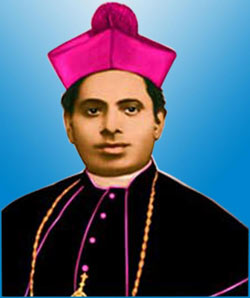
Venerable Thomas Kurialacherry, fondly called as Kunjuthomachen was born on January 14th, 1873 at Champakulam in Changanacherry, Kerala to Chackochen and Accamma. As a child, he grew up with extra ordinary goodness and piety. From his tender ages onwards Thomas had a special devotion to the Eucharistic Lord and Blessed Mother. To be a priest was his lifelong desire and he took the decision for priesthood while he was studying at Mannanam. While having his seminary education in Rome, being influenced and inspired by the Perpetual Adoration sisters who used to spend their day and night in adoration before the Blessed Sacrament, he received an inner call to make the Eucharistic Lord known, loved and adored by all, always and everywhere. During the nine years he spend at the Propaganda, he excelled in everything and in the College register it is recorded about him as the first in everything, thebeloved leader of the classmates and a zealous missionary. He had his ordination on 27 May 1899 from Cardinal Cassantha, and he offered his first Holy Mass in the chapel of Jesus that belonged to the Jesuits. On his return he pursued the inspiration to promote Eucharistic devotion in his own homeland by all means. It was mere providence that he met with Philomina Vallayil, who later came to be known as Mary Francesca de Chantal, who had a deep desire to become a nun and who shared the same charism. With her co-operation, he founded the Adoration Congregation on 8th December 1908.
In 1911, Fr. Thomas Kurialacherry was elevated as the Vicar Apostolica of Changanacherry, which led to the further growth and subsequent spreading of the congregation in different Syro-Malabar dioceses of Kerala. Bishop Kurialacherry was a zealous social reformer and a person who was enthusiastically involved in bringing transformation to the marginalized sections of society. He was a faithful son of the Church. As a priest and a bishop, he was a good shepherd who cared for the sheep under his care. As a social reformer, he stood for equality, peace and justice for all. His prophetic voice resounded throughout Kerala against social evils. He brought the Dalits into the main stream of the Catholic community. A man of ecumenical vision, he worked for the unity of various Christian communities. As a man of compassion, he was a joy to those in sorrow, refuge for the afflicted and a soothing presence for the suffering. As an educator – he was a lamp to those who were moving in darkness – a man of great intellectual vigour. Being a strong advocate of education, Mar Thomas started several educational institutions including St. Berchman’s College at Changanacherry. His 113 pastoral letters bear witness to the apostolic zeal for the spiritual welfare of the people of God. Above all, he was a man of God, an ardent devotee of the Eucharistic Lord.
Mar Thomas laboured assiduously to instil devotion to the Blessed Sacrament among all the faithful by vigorously promoting “40 and 13 hours devotions” and solemn Holy Hour celebrations in the parish community. When he prepared for his ‘adlimina’ visit to Rome, he had a conviction that it would be his last journey. It was the Silver Jubilee year of his ordination and he had planned to participate in the beatification process of St. Therese of Lisieux. Before leaving, he entrusted the sisters to the Immaculate Virgin Mary and asked forgiveness to all for his shortcomings. Reaching Rome, the seminarians from Changanacherry studying at Rome, invited him for Holy Mass at Propaganda College, which he readily accepted. Though tired, he offered Mass, but fainted after that. Thus he offered his first Holy Mass and his last Mass at the same altar. He wascalled to eternal reward on June 2nd 1925. His mortal remains were brought back to Changanacherry in 1935 and interred in the Metropolitan Cathedral church. In 2014 March 25, the mortal remains were transferred to the newly built chapel called ‘Marth Mariam Kabaridapalli’ attached to the Metropolitan church. All were convinced that Bishop Kurialacherry was a saintly man. Sisters as well as people outside began to pray for him for favours. The continuous stream of pilgrims to his tomb and the graces and favours received through his intercession, gave impetus to the desire of seeing Mar Thomas raised to honours of the altar for the greater glory of God and the good of His people.
The cause of beatification was started in 1983 at Mar Thomas Kurialacherry Vikas in Changanacherry, and the diocesan process was completed in 1991. The present postulator is Rev. Msgr. Paul Pallath. The “Positio” illustrating the heroic virtues of the Servant of God was submitted to the Sacred Congregation for the cause of Saints in 1996. A team consisting of 8 Theologians and a Promoter of Faith studied it and unanimously voted in 2010 March 26 that our Founder exercised heroic virtues. The ‘Positio’ was taken for study and discussion by the Cardinals and Bishops in the ‘Congregation for Saints’. They approved this and the Pope produced the decree recognizing the virtuous life of the Servant of God, and he was exalted as ‘Venerable’ in 2011 April 2. A first class miracle further will beatify him, and again a further miracle will pave the way for him to be canonized.
| Varghese Payapilly Palakkappilly | ||||
|---|---|---|---|---|
 |
||||
| Place of Birth: | Perumanoor, India | |||
| State: | Kerala | |||
| Date of Birth | 18 August 1876 | |||
| Died On: | 5 October 1929 | |||
| Venerable: | 4 April 2018 | |||
| Canonized: | ||||
| Buried at: | St. John Church, Konthuruthy | |||
| Feast Day: | ||||
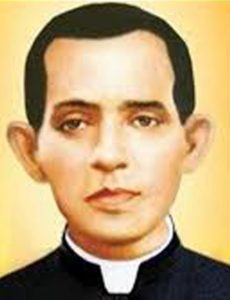
Venerable Varghese Payapilly Palakkappilly was a Syro-Malabar Catholic priest of Kerala whose memory endures as a witness to pastoral charity, practical holiness, and deep compassion for the poor. Born as Kunjuvaru on 8 August 1876 in Perumanoor, Thevara, he grew up in a devout Saint Thomas Christian family. From his early years, he was formed in an atmosphere of faith and discipline that prepared him for a life of generous service. He received his early schooling locally and later studied at St. Albert’s School in Ernakulam. His priestly formation continued in seminary, including studies linked to Kandy in Sri Lanka, before he was ordained on 21 December 1907.
As a priest, he served in several parishes of the then undivided Archdiocese of Ernakulam, including Kadamakkudy, Alangad, and Arakuzha. He was known not only as a faithful pastor but also as a capable educator and administrator. His work at St. Mary’s High School, Aluva, left a lasting mark, and he became respected for wisdom, fairness, and concern for both spiritual and human needs. Those who approached him found in him a mediator, a guide, and a priest who was willing to bear others’ burdens with patience and kindness.
His life was especially distinguished by mercy toward the poor, the abandoned, and the vulnerable. This became strikingly visible during the great flood of 1924, when he gave relief to suffering people and turned available church and school spaces into places of refuge. His priesthood was not limited to preaching and sacramental ministry; it was expressed through concrete acts of shelter, nourishment, and loving care. On 19 March 1927, moved by this same evangelical compassion, he founded the Sisters of the Destitute at Chunangamvely. Through this congregation, his charitable vision took institutional form, extending Christ’s care to the aged, abandoned, sick, and neglected.
He fell ill in September 1929 and died of typhoid on 5 October 1929. Though his earthly life was not long, his priestly witness left a deep spiritual imprint on the Church in Kerala. His cause for canonization advanced steadily: he was declared Servant of God in 2009 and was recognized as Venerable by Pope Francis on 14 April 2018, affirming the heroic virtue of his life. For the Church in India, he stands as an example of indigenous holiness rooted in the Syro-Malabar tradition—an Indian priest whose sanctity was shown in humble fidelity, courageous charity, and tender love for the destitute. His legacy continues through the congregation he founded and through the devotion of those who honor him today.
Other Interesting Facts
-
- He is especially remembered for heroic compassion toward the poor and abandoned.
- He founded the Sisters of the Destitute on 19 March 1927.
- He served as both parish priest and school manager, combining pastoral care with educational leadership.
- His flood relief work in 1924 remains one of the most noted examples of his charity in action.
- His life is an important example of sanctity within the Syro-Malabar Church and within the history of the Catholic Church in India.
Key Locations for Pilgrims
St. John Nepumsian Syro-Malabar Catholic Church, Konthuruthy, Kochi – This is the burial place of Venerable Varghese Payapilly Palakkappilly. He was laid to rest here after his death in 1929, and his mortal remains were later exhumed and transferred to a new tomb. It remains a clearly identifiable place of prayer and remembrance that pilgrims can visit today.
St. Mary’s High School, Aluva, Kerala – He served for many years as manager of this institution and shaped it as a center of discipline, education, and faith formation. During the devastating flood of 1924, he also used this setting as a place of shelter and relief for those in distress. The site remains part of his legacy and is visitable today.
St. Mary’s Syro-Malabar Major Archiepiscopal Church, Arakuzha, Kerala – He served here as parish priest between 1920 and 1922. His pastoral work in this parish was remembered for spiritual leadership, parish renewal, and educational development. Pilgrims may visit this church as one of the most directly connected public sites from his priestly ministry.
St. Joseph’s Church, Meenkunnam, Kerala – This church is associated with his pastoral concern for the faithful who had to travel long distances for Holy Mass.
| Michael Koodalloor OFM Cap | ||||
|---|---|---|---|---|
 |
||||
| Place of Birth: | Turkey | |||
| State: | Istanbul | |||
| Date of Birth | October 1, 1823 | |||
| Died On: | November 11, 1906 | |||
| Venerable: | July 2014 | |||
| Canonized: | ||||
| Buried at: | ||||
| Feast Day: | ||||
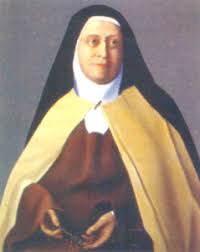
Venerable Mary Veronica of the Passion, O.C.D. founded the Sisters of the Apostolic Carmel (October 1, 1823–November 11, 1906), a religious congregation of the Discalced CarmeliteThird Order for women based in India. She was born as Sophie Leeves in 1823 in Istanbul, capital of the Ottoman Empire, to the Reverend Henry Daniel Leeves, an Anglican chaplain to the British Embassythere, and to Sophia Mary Haultain,[1] the daughter of a Colonel in the British army.
When Sophie was in her teens a change came over her. She spent long hours in prayers. She was like a child crying for the light. Her spirit craved for something that was beyond her reach. She did not know what she wanted. God had his plans for her. "Easter Tuesday ended in a dark night" she writes. "I blew out the last candles. The house was still. Suddenly a clear but soft voice broke the stillness and I heard these words distinctly 'My peace I leave you; My peace I give you'. Then all was still again, the night as well as my heart".
She felt drawn to the Catholic Church, especially the sacraments of Confession and Holy Communion. Mrs. Leeves and others were annoyed at this. But Sophie felt that God was leading her to unknown paths. She broke off the engagement she had made with Kenneth-a young and handsome naval officer.
She was received into the Catholic Church on 2 February 1850 in Malta. The following year, she went to France where she entered the Sisters of St. Joseph of the Apparition, which had been founded in 1836 by SaintEmily de Vialar. After completing the novitiate, she was professed as a member of the congregation on 14 September 1851 and received the name Sister Mary Veronica of the Passion.
In 1863 she was assigned to teach at the congregation's foundation in India, sent at the request of Bishop Marie Antony, O.C.D., who had appealed to France for assistance to hand over the education of youth to religious. As a preliminary step he had bought a house at Calicut (now Kozhikode) in 1860 and fitted it up for a convent and at the request of the people opened a school there on 1 April 1862, calling it St. Joseph's School.[2] Mother Veronica and Sr. Mary Joseph, after a long and tiring voyage and a brief halt at Mangalore, arrived there on 27 April 1862, and took charge of the school. She served as the first Superior of the convent and spent two years teaching at both Mangalore and Kozhikode.
It was there that Sister Veronica met Father Marie Ephrem of the Sacred Heart Garrelon, O.C.D. He, along with the other Discalced Carmeltite friarswho provided pastoral care for western India, had long envisioned a group of teaching Sisters to provide an education to the women and girls of the region. The friar felt that Sister Veronica was an excellent candidate to lead this effort, which coincided with her own inner call to join the Carmelite Order.
After much reflection and anguish, Sister Veronica accepted the call to start such a foundation. She left the Sisters of St. Joseph and returned to France, where she entered the Discalced Carmel of Pau as a novice. After her profession, Sister Veronica embarked on the formation of a small group of European women who had joined to start the foundation in India, living in a house in Bayonne. They officially formed the Congregation of the Sisters of the Carmelite Third Order Regular, known as the "Apostolic Carmel", on 16 July 1868, the feast of Our Lady of Mount Carmel.
A small group of three Sisters left for India, under the leadership of Mother Mary of the Angels, A.C., who served as the first Superior Generaland Mistress of novices of the new congregation. They arrived in India on 19 November 1870, about the same time as Father Ephrem was appointed as the local bishop. Shortly after their arrival, the Sisters opened the St. Ann School for Girls.
In 1873, Mother Veronica returned to her own monastery, the Carmel of Pau, where she died on 16 November 1906, at the age of 83.
On 5 September 1892, the congregation Mother Veronica helped to found became formally affiliated with the Discalced Carmelite Order. It has grown and now has branches in various parts of India, Sri Lanka, Kuwait, Pakistan, Kenya, Rome and Bahrain. The Congregation is governed under six Provinces and centrally administered by the General Team from the General Motherhouse, Bangalore, with Sr. Agatha Mary, A.C., as the present Superior General since 2008.
Mother Veronica's cause of canonization was taken up by the Sisters of the Apostolic Carmel in 1997. Mother Veronica of the Passion has been declared 'Venerable' by the Holy See in July 2014.
| Zacharias OCD | ||||
|---|---|---|---|---|
 |
||||
| Place of Birth: | Spain | |||
| State: | ||||
| Date of Birth | ||||
| Died On: | January 14, 1987 | |||
| Venerable: | January 27, 2014 | |||
| Canonized: | ||||
| Buried at: | ||||
| Feast Day: | ||||
Venerable Fr. Zacharias OCD, The Spanish Carmelite missionary spent 45 years in Kerala, teaching and forming the priests of Kerala at St. Joseph’s Pontifical Seminary Carmelgiri, Aluva. Fr. Zacharias came to India in 1912. He served the Church and society as a missionary, writer, social worker, bridge-builder between religions and Churches and above all as an instrument of God’s compassionate love to everyone. He was well versed in Western and Indian culture, religion and philosophy. He died on May 23, 1957 at Aluva. His mortal remains are preserved at the Immaculate Conception Church, Manjummel. He was elevated to the status of Servant of God on January 14, 1987, and that of Venerable on January 27, 2014.